Choosing the right sink for your kitchen can feel overwhelming. There are so many sizes, shapes, and materials to consider. But if you want something that combines durability, style, and practicality, stainless steel kitchen sinks are a clear favorite. For decades, homeowners and chefs alike have trusted stainless steel for its strength, easy cleaning, and timeless look.
But not all stainless steel sinks are created equal. Some are better at resisting scratches, others offer quieter washing, and a few stand out for their unique designs. If you’re planning a kitchen upgrade or building from scratch, learning how to pick the best stainless steel sink will make your daily life easier and your kitchen more enjoyable.
Let’s dive in and discover what makes these sinks special, how to choose the right one, and which models consistently rise above the rest.
Why Stainless Steel Sinks Remain The Top Choice
Stainless steel has been the go-to material for kitchen sinks for years—and for good reason. Its popularity is not just tradition. It’s about practical advantages that you notice every day.
First, stainless steel sinks are extremely durable. They can handle bumps from pots and pans without cracking or chipping. Unlike porcelain, there’s no risk of ugly stains. Stainless steel resists both rust and corrosion, making it ideal for wet environments like kitchens.
Second, they are easy to clean. Grease, food scraps, and even coffee stains wipe away with little effort. Most models have rounded corners, so dirt can’t hide.
Third, stainless steel sinks fit into almost any kitchen style. Whether your cabinets are modern or classic, the simple shine of stainless steel never looks out of place.
Finally, stainless steel sinks are affordable. Even high-end models usually cost less than granite or quartz alternatives. For those watching their budget, this is a major advantage.
However, not all stainless steel sinks are equally good. Some have thin metal that dents easily. Others are noisy or don’t drain well. That’s why picking the right model matters so much.
Key Features To Consider When Choosing A Stainless Steel Sink
Before you buy, it’s wise to understand what really matters in a stainless steel sink. Some features affect how the sink performs, how long it lasts, and how happy you’ll be with your choice.
1. Steel Thickness (gauge)
The gauge of the steel tells you how thick it is. Lower numbers mean thicker steel. For example, 16-gauge is thicker and sturdier than 22-gauge. Thicker sinks resist dents and feel more solid. Most experts recommend 16 or 18-gauge steel for a balance of strength and price.
2. Sink Configuration
You’ll find different layouts:
- Single Bowl: One large basin, great for washing big pots.
- Double Bowl: Two sections, helpful for separating dishes and food prep.
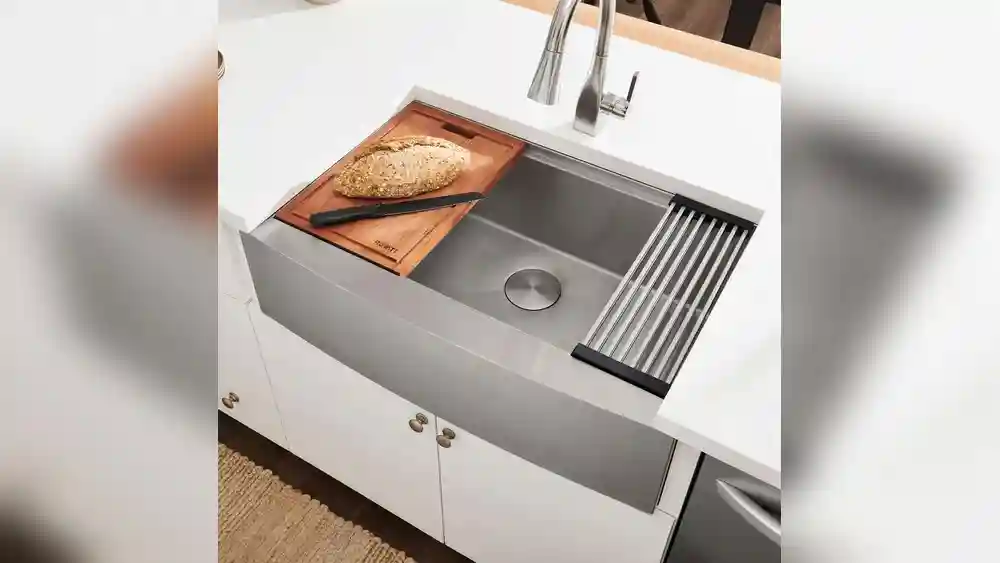
- Farmhouse (Apron-Front): The front of the sink is visible and extends slightly from the cabinet.
- Undermount: Installed below the countertop for a seamless look.
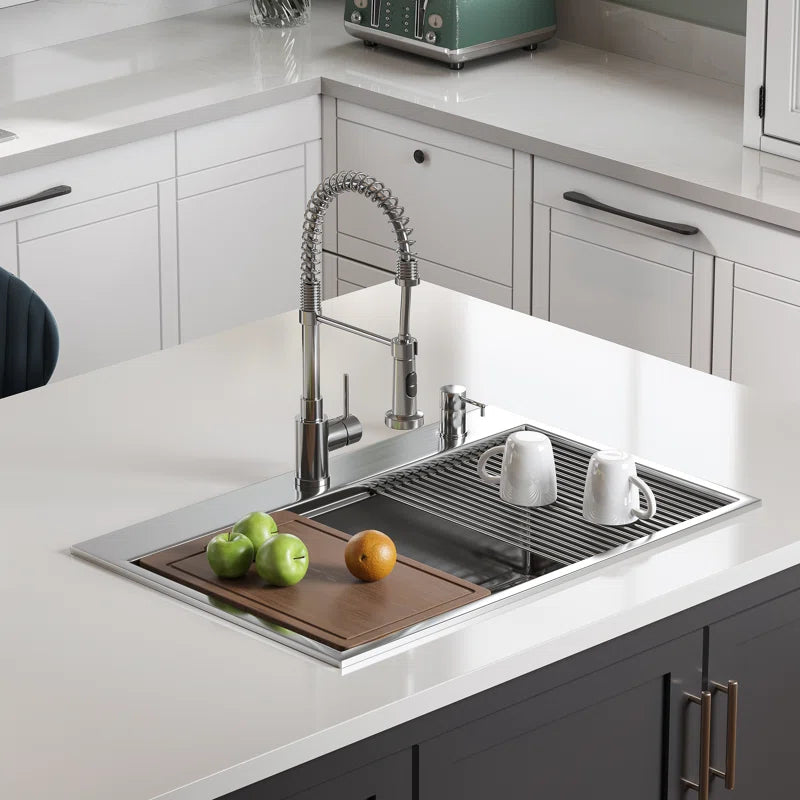
- Topmount (Drop-in): Sits on top of the counter with a visible rim.
Think about your cooking and cleaning habits. A single bowl gives you more space, while a double bowl offers flexibility.
3. Size And Depth
Standard kitchen sinks are about 22 inches from front to back and 30 to 33 inches wide. Depths range from 8 to 10 inches. Deeper sinks hold more, but may be harder to reach into—especially if you’re shorter or have back problems.
4. Sound Dampening
Thinner sinks can be noisy when you drop utensils or run water. Many quality sinks add a sound-absorbing coating or pads underneath to reduce noise.
5. Finish
Most stainless steel sinks have a satin or brushed finish, which hides scratches and fingerprints better than a shiny finish. A few high-end models offer unique textures, but they’re mostly about looks.
6. Drain Placement
Drains can be centered or set toward the rear. Rear drains create more usable space under the sink for storage.
7. Accessories And Extras
Some sinks come with useful extras: bottom grids to protect the surface, cutting boards that fit on top, or drying racks. These can save counter space and make the sink more versatile.
8. Price And Warranty
Higher prices usually mean thicker steel, better soundproofing, and more accessories. A good warranty (often lifetime) signals that the manufacturer stands behind the product.
Top 15 Best Stainless Steel Kitchen Sinks (2024)
The market is full of choices, but these fifteen models have earned top marks for quality, durability, and design. Each one has something special to offer. Here’s a closer look at what makes each sink stand out.
1. Kraus Standart Pro 32-inch Undermount Single Bowl
The Kraus Standart PRO is a favorite for many homeowners and designers. It uses thick, 16-gauge stainless steel, which feels solid and resists dents. The undermount design gives your counter a clean, modern look, and the large single bowl easily fits baking sheets and big pots.
What really sets this sink apart is its noise reduction. Kraus uses extra-thick pads and a special undercoating to absorb sound, so you won’t hear loud clangs when washing dishes. The gently sloped bottom helps water drain quickly, and rounded corners make cleaning fast and easy.
It also comes with a protective bottom grid and a drain assembly.
2. Ruvati Rvm4350 Undermount Double Bowl
If you want a double bowl, the Ruvati RVM4350 is an excellent choice. It features two equal-sized bowls, each 16-gauge steel, and a brushed finish that hides water spots. Many users like the deep, 10-inch basins, which provide space for washing and rinsing at the same time.
This sink offers excellent sound insulation with heavy-duty padding and undercoating. The tight-radius corners give it a modern look, and the rear-set drain creates extra space underneath. It comes with bottom grids and basket strainers.
3. Blanco Precis 440194 Single Bowl
The Blanco Precis is not just about strength—it’s about style. This sink is made with high-quality stainless steel and has a sleek, rectangular look that fits well in modern kitchens. The 9-inch depth is perfect for large cookware, and the undermount design makes cleanup simple.
The single bowl has a gentle slope for fast drainage, and the satin finish hides scratches. People appreciate the easy-to-clean corners and the included stainless grid that protects the sink floor.
4. Elkay Ectru32179tc Crosstown Stainless Steel Sink
Elkay’s Crosstown sink combines professional-level features with home kitchen convenience. It uses 18-gauge stainless steel and has a slightly rounded rectangle shape that looks modern but isn’t too sharp. The unique sound guard coating really cuts down on noise, making it pleasant to use.
What makes this sink special is the included accessories: a bottom grid, drain cover, and even a cutting board. The two equal bowls are each 9 inches deep, perfect for multitasking.
5. Zuhne Modena 32-inch Single Bowl
The Zuhne Modena stands out for its value and quality. It is made from premium 16-gauge stainless steel, so it feels sturdy and resists dents. The large single bowl design makes washing big pots or oven trays easy, and its brushed finish hides everyday wear.
Soundproofing is excellent, thanks to thick pads and an undercoat. This sink is also certified for lead-free construction, which is important for families. It comes with a bottom grid, basket strainer, and a drying rack.
6. Kohler K-5285-na Prolific Workstation
Kohler’s Prolific Workstation is designed for serious cooks. It’s more than just a sink—it’s a full prep station. The 33-inch single bowl is 10 inches deep, giving you room for big jobs. What makes it unique are the included accessories: a bamboo cutting board, colander, and drying racks that slide on ledges inside the sink.
Built with 18-gauge stainless steel, the Prolific has a satin finish that looks great and is easy to maintain. Kohler’s SilentShield technology keeps things quiet.
7. Kraus Khu100-30 Kitchen Sink
Another top model from Kraus, the KHU100-30 is a single bowl, undermount sink made from 16-gauge stainless steel. Its extra-deep design holds even the largest cookware, and the commercial-grade finish resists stains and scratches.
The soundproofing on this sink is outstanding, using thick pads to minimize noise. The gently sloped base helps water drain and prevents standing puddles. It includes a bottom grid and strainer.
8. Ruvati Rvh8001 Drop-in Topmount
If you prefer a topmount sink, the Ruvati RVH8001 offers a modern take. It uses 16-gauge steel and has a spacious single bowl. The rim sits above the countertop, making installation easy even for beginners.
The brushed finish hides fingerprints, and the sink includes soundproof padding. The tight-radius corners look sharp and make cleaning simple. A bottom grid, basket strainer, and mounting clips are included.
9. Blanco Diamond Equal Double Bowl
Blanco’s Diamond series is known for its balance of function and style. This equal double bowl sink is made from high-quality stainless steel with a satin finish. Each bowl is deep enough for washing large pots, and the gentle slope ensures water drains easily.
What makes this sink popular is its easy installation—both undermount and drop-in options are available. The rear drain maximizes cabinet space, and the rounded corners are easy to keep clean.
10. Moen G222174 2200 Series Double Bowl
Moen’s 2200 Series offers an affordable but reliable option. It uses 22-gauge stainless steel—thinner than premium models, but still durable for light to moderate use. The double bowls are deep and wide, fitting most household needs.
SoundShield technology reduces noise, and the sink’s satin finish resists minor scratches. It’s a good fit for those on a tight budget who still want quality from a trusted brand.
11. Franke Pkx11021 Peak Undermount
Franke’s Peak series is built for modern kitchens. The PKX11021 is a single bowl undermount sink made from top-quality, 16-gauge steel. The straight edges and square corners give it a sharp, contemporary look.
The integrated ledge holds accessories like a colander or cutting board (sold separately), turning the sink into a mini workstation. The rear drain maximizes under-sink storage.
12. Houzer Sts-1300-1 Eston Topmount
Houzer’s Eston model is a classic, single bowl topmount sink. It uses 18-gauge stainless steel and has a polished satin finish. The bowl is deep enough for everyday tasks, and the sound-dampening pad keeps things quiet.
The self-rimming design makes installation simple, and the sink comes with a limited lifetime warranty. It’s a dependable option for traditional kitchens.
13. Kraus Kwt310-33 Kore Workstation
The Kore Workstation is one of Kraus’s most versatile sinks. It’s made from 16-gauge stainless steel and offers a built-in ledge for sliding accessories. The package includes a bamboo cutting board, roll-up drying rack, and bottom grid.
The large single bowl is 10 inches deep, great for multitasking. Sound-dampening technology and a wear-resistant finish make it practical for busy kitchens.
14. Zuhne Turin 33-inch Farmhouse Sink
The Zuhne Turin brings farmhouse style to stainless steel. The apron-front design stands out, and the 16-gauge steel feels solid. The single bowl is roomy enough for family meals, and the brushed finish hides fingerprints.
This sink comes with a bottom grid, strainer, and drying rack. The soundproofing is excellent, and the sink is lead-free for peace of mind.
15. Elkay Quartz Classic Elgru13322
Elkay’s Quartz Classic is a bit different—it combines stainless steel with quartz composite. This makes the sink extra resistant to scratches, chips, and high temperatures. The undermount design gives a clean look, and the single bowl is deep and easy to clean.
This model is popular for its quiet performance and color options. It’s a good choice if you want the durability of stainless steel with a softer feel and more style choices.
Comparing The Top Stainless Steel Sinks
To help you see how some of these leading sinks stack up, here’s a quick comparison of three popular models based on key features:
| Model | Steel Gauge | Configuration | Depth | Soundproofing | Accessories |
|---|---|---|---|---|---|
| Kraus Standart PRO | 16 | Single Bowl, Undermount | 10" | Thick pads, coating | Grid, strainer |
| Ruvati RVM4350 | 16 | Double Bowl, Undermount | 10" | Heavy padding, undercoating | Grids, basket strainers |
| Kohler Prolific | 18 | Single Bowl, Workstation | 10" | SilentShield | Cutting board, racks, colander |
Single Bowl Vs. Double Bowl: Which Is Better?
Choosing between a single and double bowl is one of the first decisions you’ll face. Each has clear benefits, depending on your kitchen habits.
Single Bowl Advantages
- More space for washing large pots, pans, and trays.
- Easier to clean—no divider to trap food.
- Works well for people who mostly use a dishwasher.
Double Bowl Advantages
- Lets you separate washing and rinsing tasks.
- One side can be used for soaking or washing, the other for drying or prepping food.
- Good for multitasking—washing dishes while prepping vegetables.
A single bowl is often better for bakers and families who use big cookware. Double bowls are great for those who prefer hand washing or want more flexibility.
Undermount Vs. Topmount Sinks
How your sink is installed affects both style and function. Here’s a quick side-by-side look:
| Installation Type | Pros | Cons |
|---|---|---|
| Undermount | Seamless countertop look Easier to wipe crumbs into sink Modern appearance |
Needs solid countertop (granite, quartz) Slightly harder to install |
| Topmount (Drop-in) | Easier to install Works with any countertop Usually less expensive |
Rim can catch dirt Less sleek appearance |
If you want a clean, modern look and have solid-surface counters, undermount is ideal. If you’re on a tight budget or working with laminate, topmount is a safe choice.
How To Maintain And Care For Your Stainless Steel Sink
A well-maintained stainless steel sink can look great for decades. Here are some tips to keep it sparkling:
- Clean daily with a soft sponge and mild soap. Avoid abrasive pads—they can scratch the finish.
- Dry after use to prevent water spots and mineral buildup.
- Use a bottom grid to protect the surface from heavy pots.
- For tough stains or marks, use a paste of baking soda and water. Rinse thoroughly.
- Never leave metal pans or utensils soaking for long periods—they can cause marks.
- Avoid bleach and harsh chemicals, as these can damage the protective finish.
A non-obvious tip: Occasionally rub the sink with a small amount of olive oil on a cloth to restore shine. This also helps hide minor scratches.
Common Mistakes When Buying A Stainless Steel Sink
Even experienced shoppers sometimes overlook key details. Here are mistakes to watch out for:
- Choosing the wrong gauge: Thinner steel (higher gauge) is cheaper but prone to dents and noise. Always check the gauge before buying.
- Ignoring soundproofing: Some sinks are loud, especially when washing heavy pans. Look for thick pads or coatings.
- Overlooking drain placement: Rear drains give you more space below for storage.
- Forgetting about accessories: Bottom grids, cutting boards, and racks can make your sink much more useful.
- Picking the wrong size: Measure your cabinet and countertop opening carefully. A sink that’s too big or too small creates headaches during installation.
Insights Most Beginners Miss
Many people focus on looks and price, but two details often get overlooked:
- Corner radius matters: Tighter corners give a modern look but are slightly harder to clean. Wider (rounded) corners are easier for scrubbing but look more traditional.
- Mounting hardware quality: Cheap clips and fasteners can make installation difficult and less stable. Well-made hardware saves time and trouble.
Also, sinks with a sloped bottom drain better and are less likely to collect food scraps.
Do Stainless Steel Sinks Scratch Easily?
One concern you may have is scratching. All stainless steel sinks will develop some scratches over time, especially in busy kitchens. However, the finish makes a big difference. Brushed or satin finishes hide scratches better than polished, shiny ones.
You can reduce visible scratches by:
- Using a bottom grid to keep pots and utensils off the surface.
- Cleaning along the grain, not against it.
- Avoiding metal scouring pads.
Minor scratches usually blend in as the sink develops a uniform patina. If you want a sink that always looks perfect, look for premium models with harder finishes.
Noise Control: Making Your Sink Quieter
Stainless steel sinks can be noisy, especially when washing metal pans or running water at high pressure. Good soundproofing is a sign of a quality sink.
Look for:
- Sound-deadening pads: These are glued to the underside of the sink and absorb vibrations.
- Spray coatings: A special layer sprayed on the bottom helps reduce noise and prevent condensation.
- Thicker steel: Lower gauge (thicker) sinks naturally make less noise.
If you want a quiet kitchen, don’t settle for a sink that lacks these features.
The Role Of Accessories In Daily Life
Modern stainless steel sinks often come with accessories that make food prep and cleanup easier. Some examples:
- Bottom grids: Protect the sink from scratches and let dishes dry.
- Cutting boards: Custom-fit boards turn your sink into a prep station.
- Colanders: Ideal for rinsing vegetables or draining pasta.
- Roll-up racks: Sit on top of the sink for drying dishes or holding hot pots.
A sink with built-in ledges for sliding accessories offers the most flexibility. This is especially useful in small kitchens where counter space is limited.
Stainless Steel Vs. Other Sink Materials
You might wonder how stainless steel compares to other common sink materials. Here’s a quick summary:
- Stainless steel: Durable, affordable, easy to clean, but can scratch and be noisy.
- Granite composite: Resists scratches and stains, quieter, but heavier and sometimes more expensive.
- Porcelain: Classic look, resists stains, but can chip and is harder to keep clean.
- Quartz composite: Very tough and quiet, but limited color options.
- Cast iron: Extremely durable, heavy, and expensive. Enamel coating can chip.
For most busy kitchens, stainless steel is hard to beat on value and practicality.
Stainless Steel Sink Installation Tips
Installing a new sink can be a DIY project if you’re handy. Here are some tips for a smoother process:
- Measure carefully: Double-check cabinet and cutout sizes before buying.
- Dry-fit first: Place the sink in position to ensure a good fit before sealing.
- Use quality sealant: For undermount sinks, use a waterproof, mold-resistant sealant.
- Check for level: Use a spirit level to avoid water pooling in one corner.
- Secure tightly: Use all mounting clips provided, tightening gradually for even pressure.
If you’re unsure, hiring a professional can save time and prevent leaks.
Future Trends In Stainless Steel Sink Design
The kitchen sink is evolving. Here’s what’s coming:
- Integrated workstations: More sinks now include ledges for sliding accessories, turning the sink into a prep center.
- Matte and black finishes: Some brands offer darker tones for a modern look.
- Rounded interiors: Easier to clean, with no sharp corners for food to hide.
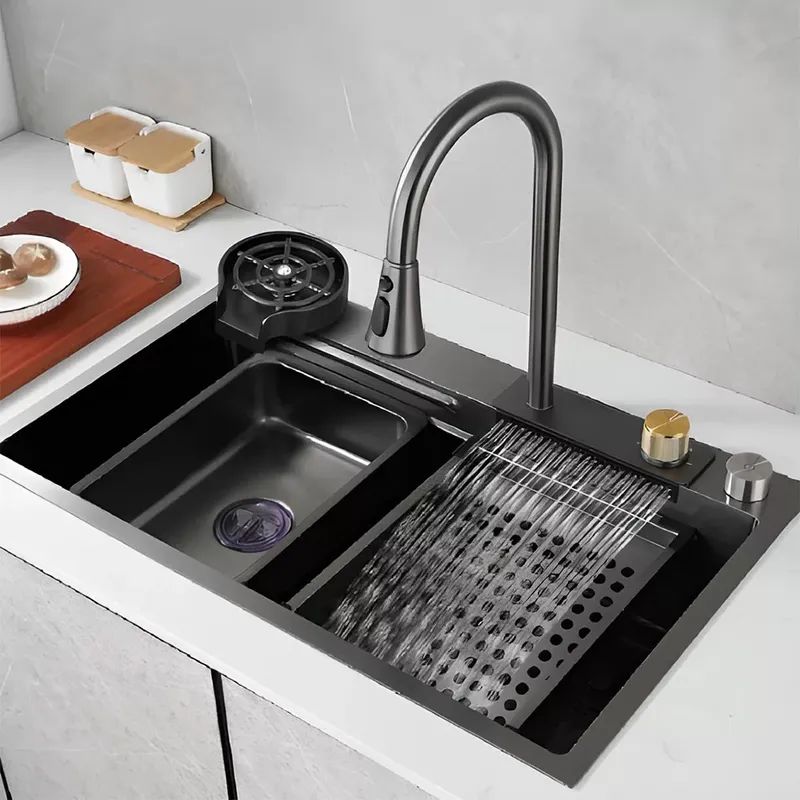
- Smart features: Touchless faucets, built-in soap dispensers, and even water filtration.
Manufacturers continue to improve soundproofing and durability, making stainless steel sinks even more appealing.
How To Spot A Quality Stainless Steel Sink
It’s easy to be fooled by shiny marketing photos. Here’s how to tell if a sink is truly high quality:
- Check the gauge: 16 or 18 is best for most kitchens.
- Look at the finish: Brushed or satin hides wear better than polished.
- Test for soundproofing: Knock the side—good sinks sound dull, not tinny.
- Inspect the welds and joints: Smooth seams mean better construction.
- Ask about the warranty: Lifetime coverage shows confidence in the product.
Reading customer reviews can also reveal real-life strengths and weaknesses.
Real-world Experiences: What Owners Say
Owners of the top stainless steel sinks often mention similar benefits. They appreciate how easy these sinks are to clean, how well they resist dents, and how quiet they are compared to older models. Many are surprised at how much they use the included accessories—especially in workstations.
A few owners note that even the best sinks can show scratches over time, but most find that regular cleaning keeps the sink looking good. People who switch from other materials often say they would never go back.
Environmental Impact And Recyclability
One hidden advantage of stainless steel sinks is their environmental friendliness. Stainless steel is 100% recyclable. Many sinks already contain a high percentage of recycled material. When your sink finally wears out—often after decades—it can be fully recycled again. This makes stainless steel a good choice for eco-conscious homeowners.
If this is a priority for you, look for brands that use recycled steel and have eco-friendly manufacturing practices.
Buying Tips: Getting The Best Value
If you want the best value for your money:
- Prioritize 16 or 18-gauge steel for strength and quietness.
- Choose a size and depth that fits your daily needs.
- Consider the value of included accessories—sometimes spending a little more up front saves you money later.
- Check for a solid warranty.
- Shop during home improvement sales for the best prices.
For more guidance on choosing kitchen fixtures, check out resources from Consumer Reports.
Frequently Asked Questions
How Long Do Stainless Steel Kitchen Sinks Last?
A quality stainless steel sink can last 20 to 30 years or even longer with proper care. The metal resists rust, corrosion, and most stains, making it ideal for long-term use.
Can Stainless Steel Sinks Stain Or Rust?
Stainless steel is designed to resist stains and rust. However, leaving steel cookware or wet sponges in the sink for long periods can cause marks. Regular cleaning and drying prevent this.
What Is The Best Way To Clean A Stainless Steel Sink?
Use a soft sponge with mild soap for daily cleaning. For water spots or tougher marks, try baking soda and water. Always rinse and dry after cleaning to keep the surface shiny.
Are Thicker Sinks Always Better?
Generally, lower gauge (thicker) sinks are stronger and quieter. But if you’re on a budget, an 18-gauge sink is often a good compromise between strength and cost. Go for 16-gauge if you want the very best.
Do Stainless Steel Sinks Lose Their Shine Over Time?
Some dulling is normal, especially with heavy use. However, regular cleaning and an occasional rub with olive oil or a stainless steel cleaner will help maintain the shine.
Choosing the best stainless steel kitchen sink is about more than just looks. It’s about finding a model that fits your space, habits, and budget—and that will serve you well for years to come. With the right choice, your kitchen will be more efficient, easier to clean, and ready for whatever cooking challenges come your way.