Many people dream of having a special spot in their home for coffee. A kitchen coffee station is more than just a place to brew your morning cup. It brings together comfort, style, and function. Whether you want a quick espresso before work or a cozy afternoon latte, a coffee station makes everything easier. You do not need a huge kitchen or expensive gadgets. With good planning and the right setup, you can create a coffee corner that matches your taste and needs.
But what really makes the best kitchen coffee station? Is it the equipment, the layout, or the design? The answer is a mix of all these things. You need smart storage, reliable machines, and a touch of your personality. In this guide, you will learn how to set up your own coffee station, what to include, and how to make it both practical and beautiful.
You will also find out about different styles, clever storage tips, and common mistakes to avoid. Let’s explore how you can turn any kitchen space into your favorite coffee spot.
Why Create A Kitchen Coffee Station?
A dedicated coffee station offers many benefits beyond just convenience. First, it keeps your kitchen organized. When coffee supplies are spread around, you waste time searching for filters or mugs. With a coffee station, everything is in one place.
Second, it saves time. Imagine waking up and having all you need—machine, beans, milk, and spoons—ready to use. This helps you start your day smoothly.
Third, a coffee station can be a design highlight. It adds warmth and personality to your kitchen. Guests will enjoy making their own drinks, and you can show off your favorite mugs or coffee art.
Finally, creating a coffee corner helps you control your coffee routine. You can choose your beans, adjust your recipes, and enjoy better quality than many coffee shops.
Planning Your Kitchen Coffee Station
Before you buy anything, think about what you really want from your coffee station. Planning is key for a smooth and useful setup.
Decide On Your Coffee Style
Ask yourself: What drinks do you make most often? If you love drip coffee, a simple machine will do. For espresso fans, you might need a more advanced setup. If you like iced coffee or cold brew, space for a pitcher is important. Make a quick list of your favorite drinks. This will shape your choices.
Choose The Right Location
Not every kitchen has extra space. But you do not need much room for a coffee station. Common spots include:
- An empty corner of your counter
- A section of a pantry shelf
- A rolling cart
- A spare cabinet or sideboard
Pick a place close to a power outlet and water supply if possible. Good lighting also helps, especially for early mornings.
Measure Your Space
Take a tape measure and check the area you plan to use. Write down the width, depth, and height. This helps you avoid buying equipment that is too big. Remember, you need space not just for machines but also for mugs, jars, and tools.
Plan Storage
Think about what you will store at your station:
- Coffee maker or espresso machine
- Grinder
- Coffee beans or ground coffee
- Filters or pods
- Mugs and spoons
- Syrups, sugar, or milk
- Cleaning supplies
Drawer organizers, jars, hooks, or small shelves can help keep things tidy. Vertical storage saves space if your counter is small.
Set A Budget
Coffee stations can be simple or fancy. Decide how much you want to spend. List your “must-haves” and “nice-to-haves. ” Start basic, then add items over time if needed.
Essential Equipment For Your Coffee Station
Every kitchen coffee station needs some basic items. The right equipment depends on your taste and budget. Here are the main tools to consider.
1. Coffee Maker Or Espresso Machine
This is the heart of your coffee station. There are several types to choose from:
- Drip coffee makers are reliable and easy to use. Good for families or those who drink several cups daily.
- Single-serve pod machines (like Keurig or Nespresso) are fast and clean, but pods cost more.
- Manual pour-over sets are simple and offer control over taste but need more hands-on time.
- Espresso machines make strong coffee and let you create lattes or cappuccinos. Some are easy to use; others require practice.
- French presses and AeroPress are compact and do not need electricity.
Think about what will fit your space and routine.
2. Grinder
Freshly ground beans make a big difference. You can choose:
- Blade grinders: Cheap and small, but grind unevenly.
- Burr grinders: More expensive, but produce consistent grounds for better taste.
If you buy pre-ground coffee, you can skip this.
3. Kettle
A good electric kettle with temperature control is great for pour-over or French press. Some coffee makers have a hot water function.
4. Milk Frother
If you enjoy lattes or cappuccinos, a milk frother is important. Some espresso machines include one. You can also buy a handheld or electric frother.
5. Storage Jars
Keep your beans or grounds fresh in airtight jars. Glass or metal containers with tight lids are best. Label them for easy use.
6. Mugs And Cups
Choose your favorite mugs and cups. Stackable or hanging mugs save space. Have at least two per person who uses the station.
7. Spoons And Stir Sticks
Place a few stainless steel spoons or wooden stir sticks nearby. A small jar or cup keeps them organized.
8. Filter Storage
If you use paper filters, store them in a box or jar. This avoids mess and saves time.
9. Cleaning Tools
A clean station makes better coffee. Keep a small brush for the grinder and a cloth for spills. Some machines need descaling solutions.
10. Extras
Optional but nice to have:
- Syrup bottles for vanilla, caramel, or hazelnut
- Cinnamon or cocoa shakers
- Small tray for sugar packets or honey
- Measuring scoop
Design Styles For Kitchen Coffee Stations
Your coffee station should fit your kitchen’s look and your own style. Here are some popular ideas:
Modern Minimalist
This style uses clean lines and neutral colors. Store only what you use daily. White, black, or stainless steel machines look good here. Use glass jars and hidden storage.
Rustic Farmhouse
Wood shelves, baskets, and vintage mugs create a cozy feel. Use chalkboard labels and a wooden tray. Add a small plant or framed quote.
Industrial
Metal shelves and dark colors give an urban vibe. Wire baskets, matte black machines, and exposed brick look great. Hang mugs on steel hooks.
Scandinavian
Keep things bright and simple. Use light wood, pastel mugs, and open shelves. Add a ceramic pot or small art print.
Small Space Coffee Station
If your kitchen is tiny, try a rolling cart or a wall shelf. Use stackable items and vertical storage. Choose a compact machine.
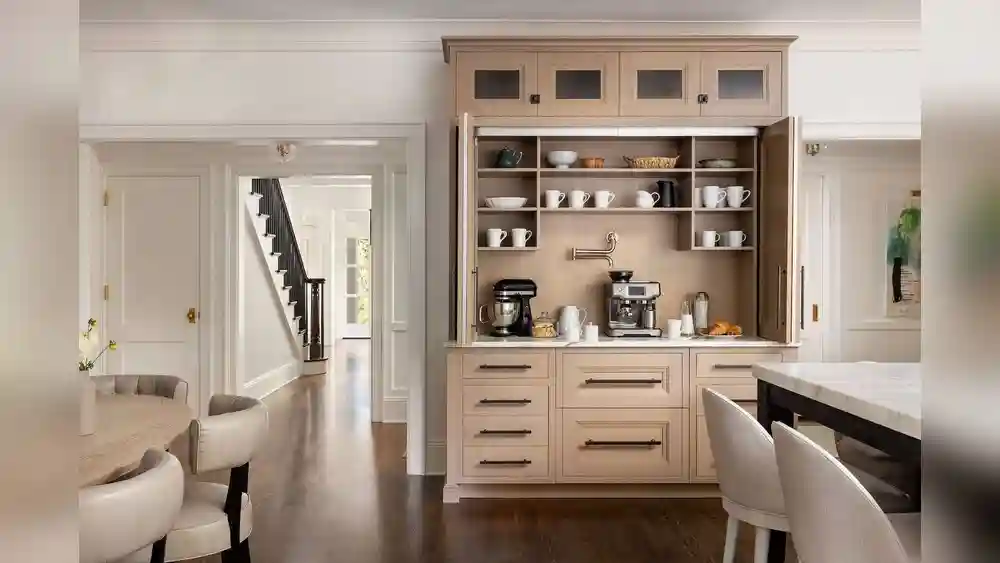
Built-in Coffee Bar
If you remodel your kitchen, consider a built-in coffee nook. This can have drawers, a mini fridge, and a water line for espresso machines.
Layout Ideas For All Kitchen Sizes
No matter your kitchen size, you can find a coffee station layout that works. Here are some ideas for different spaces.
Compact Countertop Station
Choose one part of your kitchen counter. Place your machine, a jar of beans, and two mugs. Use wall hooks for spoons. A small tray keeps items grouped.
Coffee Cart
A rolling cart is flexible. You can move it as needed or use it for parties. Place your machine on top, mugs and jars on the shelf below. Add a small plant for style.
Hidden Cabinet Station
If you want a clean look, use a cabinet. Add a shelf for your machine, jars, and mugs. Close the door when not in use. This keeps your kitchen tidy.
Wall-mounted Shelves
Install floating shelves above your counter. Store mugs, beans, and jars here. This saves counter space and looks stylish.
Pantry Coffee Corner
If you have a pantry, set up a small coffee zone inside. Store all supplies together. This is great for keeping clutter out of the main kitchen.
Smart Storage Solutions
A clutter-free coffee station is more enjoyable to use. Here are some clever storage tips:
- Use clear jars for beans, sugar, and filters. This makes it easy to see when you need to refill.
- Add hooks under shelves for hanging mugs or tools.
- Try drawer dividers for spoons, stirrers, and small items.
- Install a shelf riser to add layers for cups and jars.
- Store syrups in a tray to avoid sticky messes.
- Label everything so guests can find what they need.
- Use stackable bins for pods or tea bags.
A tidy space saves time and keeps your coffee routine stress-free.
Creating A Coffee Station On A Budget
You do not need to spend a lot to have a great kitchen coffee station. Here’s how to save money:
- Start with what you have. Use your current machine and mugs.
- Buy secondhand. Many people sell good coffee gear online.
- Use jars from old jam or sauce for storing beans.
- Make your own shelf from leftover wood.
- Decorate with items you already own—a small plant, a photo, or a tray.
A simple station can feel just as special as a fancy one.
Best Kitchen Coffee Station Setups For Different Needs
Every home is different. Here are ideas for the best coffee station for several types of users.
For Busy Mornings
If you are always in a rush, speed is key. Use a single-serve pod machine or a reliable drip coffee maker with a timer. Keep pods, sugar, and mugs in easy reach. Choose tools that are easy to clean.
For Coffee Lovers
If you enjoy trying new beans or recipes, get a good grinder and a scale. Store several types of beans in labeled jars. Add a pour-over or French press for variety. Keep a notebook for tasting notes.
For Families
A large drip coffee maker works best. Store many mugs on a rack. Use a basket for sugar and stirrers. Make sure everything is easy to reach for all family members.
For Entertaining Guests
A coffee station can be a party highlight. Offer a variety of syrups and toppings. Place mugs and spoons on a tray. Add a sign with drink ideas. A small milk frother lets guests make lattes.
For Small Spaces
Choose compact equipment, like a single-serve machine or a French press. Use wall shelves and hooks. Store beans and mugs above the counter to save space.
Example Coffee Station Setups
To help you picture your own space, here are three real-world examples.
Example 1: Cozy Counter Corner
A family with a medium-size kitchen used one end of their counter for coffee. They placed a drip machine, a grinder, and three jars (beans, sugar, filters) on a tray. Mugs hang from hooks above. A small chalkboard lists “Today’s Coffee.
” This setup takes just 60 cm of space.
Example 2: Rolling Coffee Cart
An apartment renter used a small cart. On top: a single-serve machine, two mugs, and a jar of pods. Below: syrup bottles, a milk frother, and extra spoons. The cart moves to the dining room for guests. The setup cost under $100 with secondhand items.
Example 3: Hidden Pantry Bar
A couple with a walk-in pantry put a shelf for their espresso machine and grinder. Below, bins hold beans, filters, and snacks. Mugs and glasses hang from hooks. They keep the door closed when not in use, hiding the station from view.
Comparing Popular Coffee Station Types
Here is a simple comparison of three common coffee station types:
| Type | Best For | Space Needed | Cost Range | Key Features |
|---|---|---|---|---|
| Countertop | Most kitchens | Small to medium | Low to moderate | Easy setup, visible |
| Rolling Cart | Small spaces, renters | Very small | Low to moderate | Portable, flexible |
| Built-in | Large kitchens, remodels | Medium to large | Moderate to high | Hidden storage, custom look |
Choosing The Right Coffee Machine
The coffee machine is the centerpiece of your station. Here is how to compare the most popular types:
| Machine Type | Ease of Use | Drink Variety | Price | Maintenance |
|---|---|---|---|---|
| Drip Coffee Maker | Very easy | Limited | Low | Low |
| Single-Serve Pod | Very easy | Medium | Low to moderate | Low |
| Espresso Machine | Moderate to hard | High | Moderate to high | Medium |
| Manual Pour-Over | Moderate | Medium | Low | Low |
| French Press | Easy | Limited | Low | Low |
Common Mistakes When Setting Up A Coffee Station
Many people make small errors that can lead to a messy or hard-to-use station. Here are some mistakes to avoid:
- Overcrowding the counter. Too many items make it hard to clean and use the station.
- Ignoring storage. Without bins or jars, supplies get lost or spill.
- Buying the wrong equipment. Choose machines and tools that match your favorite drinks.
- Forgetting cleaning tools. A dirty station affects taste and looks.
- Skipping power needs. Make sure you have enough outlets.
- Not thinking about water. If your machine needs filling, keep it near the sink or use a pitcher.
A bit of planning saves time and trouble later.
Adding Personal Touches
A coffee station should feel special. Here are ways to add your own style:
- Display your favorite mug or a family photo.
- Use a chalkboard or letter board for quotes.
- Add a small plant or flower vase.
- Choose a tray or mat that matches your kitchen colors.
- Hang a small art print or coffee-themed sign.
Your coffee station should make you smile every morning.
Maintenance Tips For Your Coffee Station
A well-kept station works better and lasts longer. Here are smart habits:
- Wipe surfaces daily to avoid spills and stains.
- Clean machines weekly—follow the maker’s instructions.
- Wash mugs and spoons after every use.
- Check beans and supplies for freshness every month.
- Descale espresso machines as needed (usually every 1-3 months).
These small steps keep your coffee tasting great.
Sustainable Choices For Your Coffee Station
More people want eco-friendly coffee habits. Here’s how you can help the planet:
- Use reusable filters instead of single-use paper ones.
- Choose whole beans and grind at home to reduce packaging.
- Store beans in glass jars, not plastic.
- Recycle pods if you use a pod machine (many brands offer recycling programs).
- Buy local or fair-trade coffee when possible.
- Compost coffee grounds—they are great for plants.
A green coffee station is good for you and the earth.
Inspiring Coffee Station Trends
Coffee stations are getting more creative every year. Here are some trends to watch:
- Smart machines that connect to your phone for custom brews.
- Built-in mini fridges for milk or plant-based creamers.
- Open shelving to show off pretty mugs and jars.
- Hidden pull-out drawers for pods or filters.
- Coffee art corners with a spot for drawing latte art.
You can add one or two of these ideas to update your station.
Must-have Accessories For Coffee Lovers
While the basics are enough for most, some accessories can make your station stand out:
- Digital scale for perfect brewing ratios.
- Thermometer to check milk temperature.
- Knock box for used espresso grounds.
- Travel mugs for coffee on-the-go.
- Coffee canister with date wheel to track freshness.
- Reusable metal or glass straws.
These extras are not required but can improve your coffee routine.
How To Keep Your Coffee Station Guest-friendly
If you often have friends over, make your coffee station easy for guests:
- Label jars and bottles clearly.
- Place mugs, sugar, and spoons within reach.
- Offer a simple “how-to” sign for your machine.
- Keep a few decaf pods or tea bags for non-coffee drinkers.
- Use a tray or mat to catch spills.
A welcoming setup lets guests help themselves and enjoy your hospitality.
Coffee Station Safety Tips
Kitchens can be busy places. Keep your station safe with these steps:
- Place machines away from the stove to avoid heat damage.
- Keep cords tidy and out of walkways.
- Store hot water tools (like kettles) on stable surfaces.
- Avoid stacking heavy items on high shelves.
- Clean up spills quickly to prevent slips.
Safe habits protect your family and your gear.
Best Places To Find Coffee Station Inspiration
If you want new ideas, check these sources:
- Social media sites like Pinterest and Instagram have thousands of real-life coffee stations.
- Home improvement websites show new trends and DIY projects.
- Coffee shop visits can spark ideas for layout or display.
- Magazines often feature creative kitchens.
- YouTube has video tours and setup guides.
You can also check trusted sources such as Architectural Digest for expert advice and beautiful photos.

Coffee Station Cost Breakdown
Setting up a coffee station does not have to be expensive. Here is a sample budget for a basic, mid-range, and luxury setup:
| Item | Basic Setup | Mid-Range Setup | Luxury Setup |
|---|---|---|---|
| Coffee Machine | $30 (drip maker) | $150 (pod or good drip) | $700 (espresso machine) |
| Grinder | $15 | $60 | $200 |
| Kettle | $20 | $50 | $150 |
| Milk Frother | $10 (handheld) | $40 (electric) | $150 (built-in) |
| Jars & Storage | $10 | $30 | $100 |
| Mugs & Spoons | $20 | $40 | $100 |
| Decor & Accessories | $5 | $30 | $80 |
| Total | $110 | $400 | $1,480 |
You can see that a small budget is enough for a basic station. Add or upgrade items as your needs grow.
Two Insights Most Beginners Miss
- Workflow matters more than looks. It is easy to focus on style, but a coffee station should make your routine easier. Place items in the order you use them, from grinder to brewer to mugs. This “flow” saves time and reduces mess.
- Freshness is key to good coffee. Many people buy expensive machines but store beans in open bags. Air, light, and heat ruin coffee quickly. Use airtight, dark jars and buy smaller amounts of beans more often. This makes a bigger difference than most gadgets.
Frequently Asked Questions
How Much Space Do I Need For A Kitchen Coffee Station?
You can set up a basic coffee station in as little as 40 cm of counter space. For more gear, aim for 60-90 cm. Use vertical storage or a rolling cart for small kitchens.
What Is The Best Type Of Coffee Machine For A Home Coffee Station?
The best machine depends on your favorite drinks and how much time you have. Drip makers are easy and great for many people. Single-serve pod machines are fast. Espresso machines make the most types of drinks but need more skill and space.
How Can I Keep My Coffee Station Organized?
Use clear jars, labels, and trays. Store only what you use daily. Clean up after each use and check supplies weekly. Hooks and shelves help keep things tidy.
What Should I Do If I Have A Very Small Kitchen?
Pick compact tools like a French press or single-serve machine. Use wall shelves and hooks to save counter space. Consider a rolling cart or a hidden cabinet setup.
How Often Should I Clean My Coffee Equipment?
Wipe surfaces every day. Wash mugs and spoons after each use. Clean your machine and grinder weekly, and descale as the maker recommends (usually every 1-3 months).
Creating a kitchen coffee station brings comfort and joy to your daily routine. With good planning, even a small space can offer all you need for a perfect cup. Your station should reflect your taste, fit your space, and make mornings easier.
Start simple, and adjust as you learn what works for you. With a little effort, your kitchen will soon be home to the best coffee spot in town.