Choosing the right kitchen countertop is not just about looks. It’s about creating a space that feels welcoming, practical, and lasting. Carrara marble is one of the most popular choices for kitchen countertops today. The reasons are clear: its classic beauty, unique patterns, and natural elegance make any kitchen feel brighter and more inviting. But there’s much more to Carrara marble than what meets the eye. If you are considering adding Carrara marble to your kitchen, you need to understand its features, care, types, and how to make the best decision for your home.
In this guide, you will learn everything about Carrara marble countertops. You’ll discover the pros and cons, how to choose the right slab, installation tips, maintenance advice, and common mistakes to avoid. You’ll also see real-life examples and data that help you understand why Carrara marble stands out. This article will help you make an informed choice and enjoy your countertop for years to come.
What Makes Carrara Marble Unique?
Carrara marble comes from the city of Carrara in Italy. It has been used since ancient times for sculptures and buildings. The marble is famous for its soft white color and gentle gray veining. Unlike other marble types, Carrara is often more subtle and less dramatic.
Some key features:
- Color: Mostly white with light gray or blue-gray streaks.
- Texture: Smooth and cool to the touch.
- Pattern: Veins are thin and feathery, not bold.
- Origin: Only from quarries in Carrara, Tuscany, Italy.
Carrara marble is often compared to Calacatta marble. Calacatta has bolder veins and warmer tones, while Carrara is softer and more uniform. This subtle look makes Carrara marble easy to match with many kitchen styles, from modern to traditional.
Advantages Of Carrara Marble Countertops
When you choose Carrara marble for your kitchen, you get more than just good looks. Here are some real advantages:
- Timeless beauty: Carrara marble never goes out of style. Its classic appearance fits any design.
- Natural uniqueness: Each slab is different. You’ll never find two that look exactly the same.
- Increases home value: Marble countertops are seen as a luxury feature.
- Works with many colors: The neutral palette blends with wood, stainless steel, and painted cabinets.
- Cool surface: Marble stays cool, which is good for baking and food prep.
- Easy to clean: With proper sealing, it resists stains and wipes clean.
- Versatility: Can be used for countertops, backsplashes, and islands.
Many homeowners pick Carrara marble because it gives their kitchen a calm, elegant feeling. The stone can make small kitchens look bigger and brighter.
Disadvantages And Challenges
Carrara marble is beautiful, but it’s not perfect. Here are some challenges you need to know:
- Prone to staining: Marble is porous. It can absorb liquids like wine, juice, or oil.
- Sensitive to acids: Lemon, vinegar, and tomato can etch the surface, leaving dull spots.
- Scratches easily: Sharp objects can mark the marble.
- Needs regular sealing: Without sealing, stains and etching happen faster.
- Can chip or crack: Heavy impacts can cause damage.
- Shows wear over time: The surface may develop a patina, which some people like and others do not.
These issues are not unique to Carrara marble, but you should be aware before making your decision. Proper care and maintenance help reduce these risks.
Types Of Carrara Marble Countertops
Carrara marble comes in several varieties. The differences depend on the quarry, color, and pattern. Here are the main types you’ll see:
- Bianco Carrara: The most common type. It has a bright white background and light gray veins. Great for classic kitchens.
- Carrara Venato: Slightly more pronounced veining. The veins are longer and bolder, but still delicate.
- Carrara Gioia: Finer grain and lighter color. Sometimes almost pure white.
- Statuario Carrara: More dramatic veining, sometimes mixed with Calacatta. Used for statement pieces.
- Carrara Extra: Selected for fewer impurities and more uniform color.
When you shop for Carrara marble, ask to see several slabs. The differences may seem small, but they change how your kitchen looks.
Comparing Carrara Marble To Other Countertop Materials
To help you see how Carrara marble compares to other popular countertop materials, here’s a quick look:
| Material | Appearance | Durability | Maintenance | Cost (per sq ft) |
|---|---|---|---|---|
| Carrara Marble | Soft white, gray veins | Medium (can scratch/etch) | Needs sealing, gentle cleaning | $60–$100 |
| Granite | Speckled, many colors | High (very hard) | Seal occasionally | $50–$150 |
| Quartz | Uniform, many designs | Very high | Low (easy) | $70–$120 |
| Laminate | Plastic, many patterns | Low (can chip) | Very easy | $20–$40 |
| Butcher Block | Warm wood | Medium | Oil regularly | $40–$100 |
You can see that Carrara marble is in the mid-to-high price range. It needs more care than quartz or granite, but its unique look is hard to match.
How To Choose The Best Carrara Marble Slab
Picking the right slab is not just about choosing the whitest one. Here are practical steps and tips to get the best result:
- Visit the stone yard: Always see the slabs in person. Photos do not show the real colors and patterns.
- Check for uniformity: Decide if you want even color or dramatic veining. Some slabs are more consistent than others.
- Look for cracks or pits: Inspect the surface closely. Small cracks can become bigger over time.
- Ask about thickness: Standard thickness is 2cm or 3cm. Thicker slabs are stronger and look more solid.
- Test the finish: Polished marble is shiny but shows scratches. Honed marble is matte and hides marks better.
- Consider edge styles: Square, beveled, or ogee edges change the look. Match the edge to your kitchen style.
- Request samples: Bring home small pieces to see how they look under your kitchen lighting.
Many buyers forget to check how light affects the marble. Bright kitchens may show veins more strongly. If your kitchen is dark, a whiter slab helps reflect light.
Installing Carrara Marble Countertops
Installation is a big part of getting the best results. Here’s what to expect:
- Measurement and templating: Professionals measure your kitchen and make a template for cutting the slab.
- Cutting and finishing: The marble is cut to shape, and edges are finished. Holes for sinks and faucets are made.
- Sealing: Before installation, the marble is sealed to prevent stains.
- Delivery and placement: The slab is brought in carefully. Marble is heavy and fragile, so skilled installers are essential.
- Final sealing: After installation, another layer of sealant is applied.
The process usually takes a few days from measurement to final placement. Never try to install marble yourself unless you have experience and tools. Mistakes can cause cracks or poor fit.
Installation Costs
Carrara marble installation can be expensive. Here’s a simple breakdown:
- Material cost: $60–$100 per square foot.
- Installation cost: $30–$50 per square foot.
- Edge finishing: $10–$20 per linear foot.
- Sealing: $5–$10 per square foot.
A typical kitchen (40 square feet) may cost $3,600–$6,000 for marble and installation. Custom edges, backsplashes, and cutouts can add to the price.
Data Insight
A survey from the National Kitchen and Bath Association found that marble countertops increase home value by about 12% compared to laminate or wood. This means your investment can pay off if you plan to sell your home.

Maintenance And Care Tips
Carrara marble needs regular care. Here’s how to keep it looking its best:
- Seal every 6–12 months: Use a marble sealer to block stains. Test by sprinkling water—if it absorbs, reseal.
- Clean spills quickly: Wipe up wine, juice, coffee, and oil right away.
- Use mild soap: Clean with a soft cloth and gentle soap. Avoid harsh cleaners.
- Avoid acidic foods: Lemon, vinegar, and tomato can etch marble. Use a cutting board.
- Protect from scratches: Do not cut directly on the marble. Use mats under heavy appliances.
- Buff out small marks: For minor scratches, use marble polish and a soft cloth.
- Do not sit or stand: Marble can crack under weight. Keep heavy objects off the edges.
Many people miss the importance of resealing. Without it, stains happen quickly. It’s also wise to use coasters and trays for bottles and jars.
Common Mistakes To Avoid
Beginners often make these mistakes with Carrara marble countertops:
- Skipping sealing: Marble must be sealed regularly. Forgetting leads to stains.
- Using rough cleaners: Abrasive pads and strong chemicals damage the surface.
- Placing hot pans directly: Marble can handle some heat, but sudden temperature changes may cause cracks.
- Ignoring cracks: Small cracks grow larger. Fix them early with professional help.
- Choosing the wrong finish: Polished marble shows wear more quickly. Honed marble is better for busy kitchens.
Another mistake is buying marble without checking the slab in person. Patterns and colors look different under kitchen lighting.
Carrara Marble In Different Kitchen Styles
Carrara marble works with many kitchen designs. Here are examples:
Modern Kitchens
Carrara marble pairs well with minimalist cabinets and stainless steel appliances. The soft white color creates a clean, bright look. For a modern feel, choose slabs with less veining and a straight edge.
Traditional Kitchens
In classic kitchens, Carrara marble gives a timeless touch. Pair it with wood cabinets and brass hardware. A beveled edge adds elegance.
Farmhouse Kitchens
Carrara marble brings warmth to farmhouse kitchens. Combine it with open shelves and rustic wood. Use honed marble for a softer, matte finish.
Small Kitchens
Carrara marble makes small kitchens feel bigger. The light color reflects natural light. Choose slabs with subtle veins for a more spacious effect.
Open Concept Kitchens
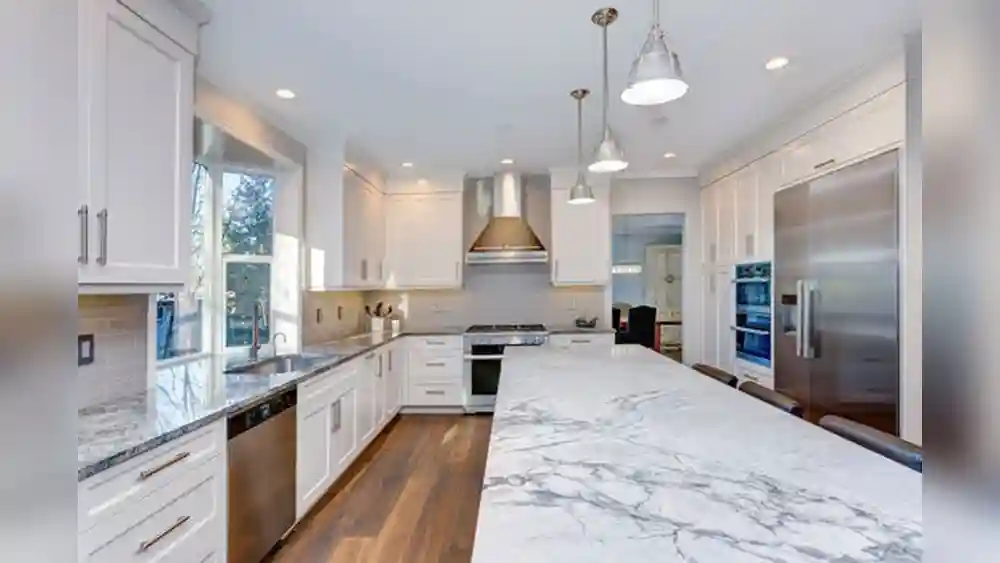
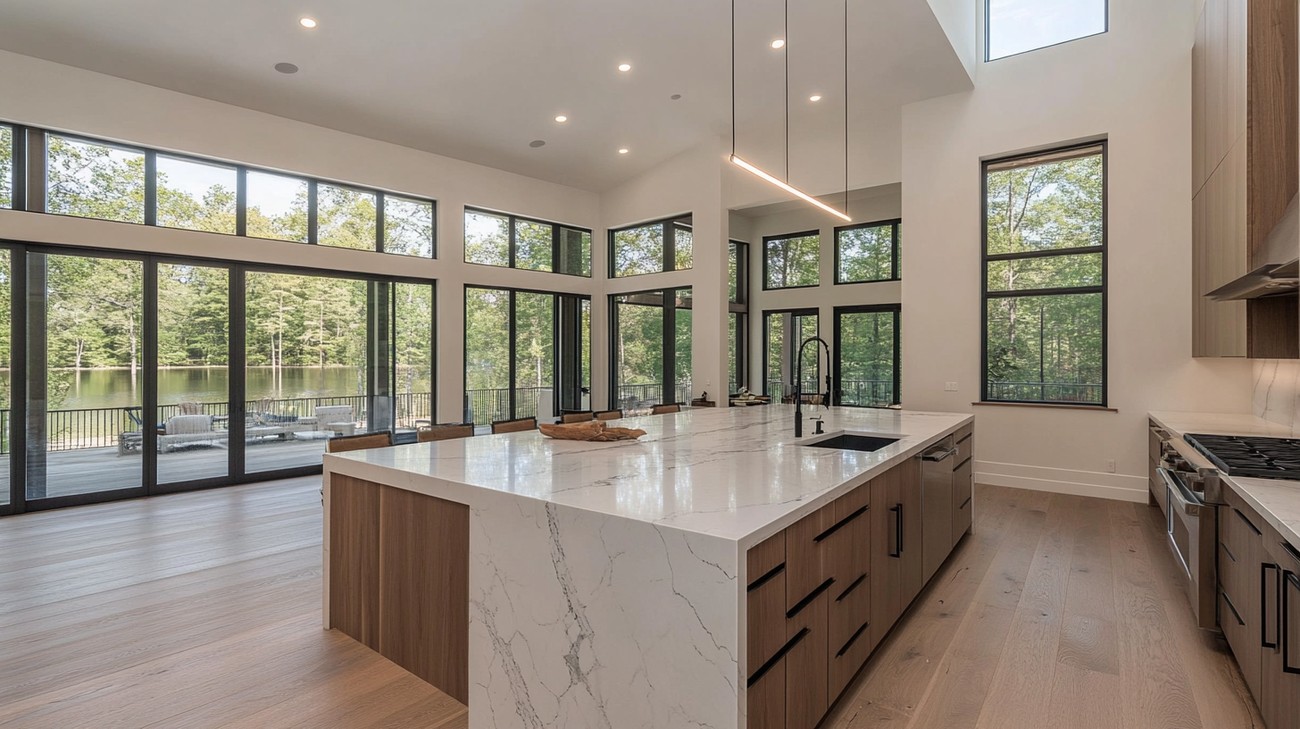
In open kitchens, Carrara marble islands become the centerpiece. They connect dining and cooking areas, adding style and function.
Carrara Marble Countertops: Real-life Examples
To see how Carrara marble looks in actual kitchens, here are a few examples:
- Urban apartment: A small kitchen uses Carrara marble for the countertop and backsplash. The marble’s brightness makes the space feel larger.
- Luxury home: Large islands in Carrara marble become gathering spots. The dramatic veining adds character.
- Family kitchen: Honed marble counters resist scratches better. With regular sealing, the surface stays clean even with kids around.
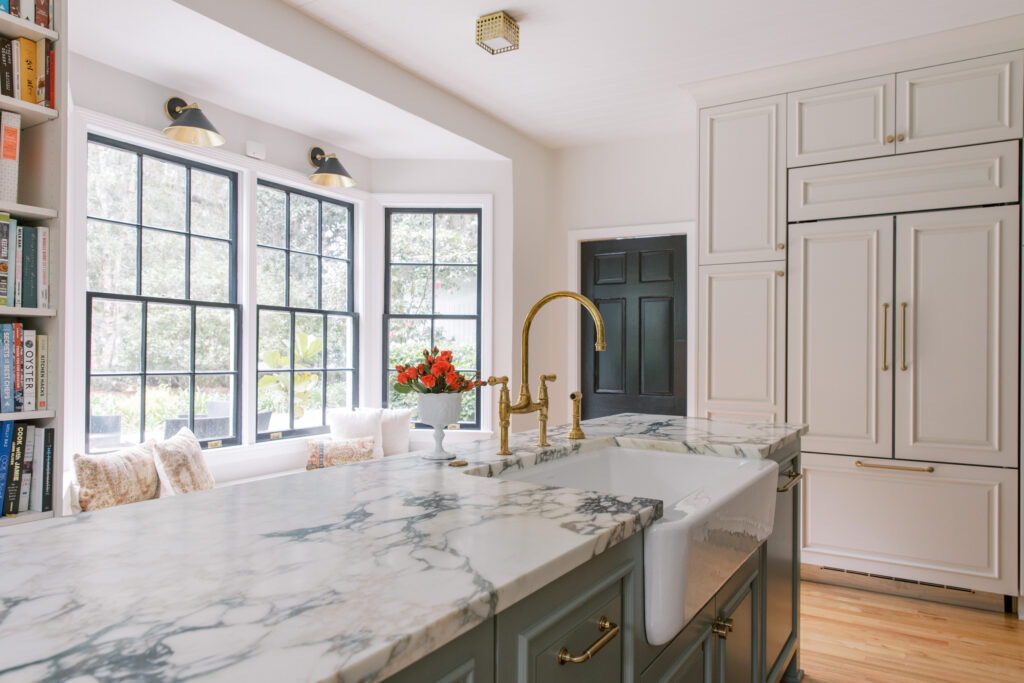
- Renovated cottage: Carrara marble with a farmhouse sink blends old and new styles.
Homeowners often mention how guests notice the marble right away. It’s a conversation starter and adds a feeling of luxury.
Comparing Carrara Marble Slabs: What To Look For
When you visit a stone yard, you’ll see many slabs. Here’s how to compare:
| Slab Name | Background Color | Vein Style | Finish | Best Kitchen Style |
|---|---|---|---|---|
| Bianco Carrara | Bright white | Light, feathery | Polished or honed | Modern, traditional |
| Venato Carrara | White-gray | Bolder, longer | Honed | Farmhouse |
| Gioia Carrara | Very light | Fine grain | Polished | Contemporary |
| Statuario Carrara | White | Dramatic | Polished | Luxury |
| Extra Carrara | Uniform white | Subtle | Honed | Minimalist |
Ask your supplier to show you slabs under natural and artificial light. Sometimes a slab looks different at home than in the showroom.
Carrara Marble Countertop Finishes
The finish you choose affects both the look and durability:
- Polished: Shiny, smooth, and reflective. Shows off the veins but reveals scratches more easily.
- Honed: Matte, soft, and velvety. Hides marks and etching better.
- Leathered: Slightly textured, not common for kitchen counters but adds interest.
Most kitchens use honed finish because it’s practical for daily use. Polished marble is popular for showpiece islands.
Edge Styles For Carrara Marble Countertops
Edges are often overlooked, but they change the appearance and safety:
- Straight edge: Simple and modern. Good for minimalist kitchens.
- Beveled edge: Angled cut, adds a classic touch.
- Ogee edge: Curved, elegant, and traditional.
- Bullnose edge: Rounded, safe for families.
Choose an edge that matches your cabinet style and kitchen design.
Carrara Marble Countertop Thickness
The thickness impacts strength and style:
- 2cm (3/4 inch): Standard thickness. Lighter and easier to install.
- 3cm (1 1/4 inch): Thicker, more durable, and gives a richer look.
- Custom thickness: Used for dramatic islands or special designs.
Thicker slabs are better for large islands or areas with heavy use.
Carrara Marble Backsplashes
Carrara marble isn’t just for countertops. Many homeowners use it for backsplashes:
- Full slab backsplash: Matches the countertop and creates a seamless look.
- Tile backsplash: Small marble tiles add texture and pattern.
- Accent strip: A narrow band of marble highlights the area behind the stove.
Backsplashes protect walls from splashes and add beauty.
Carrara Marble Islands
A marble island is the centerpiece of many kitchens. It gives you extra workspace and storage. Carrara marble is ideal for islands because:
- It creates a focal point.
- It’s durable for food prep.
- It’s easy to clean.
For large islands, choose a slab with dramatic veining to make a statement.
Carrara Marble Countertop Accessories
To protect your marble and make your kitchen more functional, consider:
- Marble trays: Perfect for serving or organizing spices.
- Coasters: Prevent stains from drinks.
- Cutting boards: Protect the surface from knives.
- Heat mats: Avoid damage from hot pans.
These accessories help keep your marble in good condition.
Carrara Marble And Sustainability
Many people want eco-friendly options. Carrara marble is natural, but mining and transport use energy. Here are some points:
- Marble lasts a long time, reducing waste.
- It’s recyclable and can be repurposed.
- Quarries in Carrara use modern practices to reduce impact.
If you care about sustainability, ask your supplier about their quarrying methods.
Carrara Marble Countertop Trends
Trends change, but Carrara marble stays popular. Some current trends:
- Waterfall edges: The marble extends down the sides of the island.
- Mixing materials: Carrara marble with wood or metal accents.
- Integrated sinks: Marble sinks that match the countertop.
- Open shelving: Marble shelves for spices or dishes.
These trends add style without sacrificing practicality.
How Carrara Marble Affects Resale Value
Homes with marble countertops sell faster and for higher prices. According to Zillow, kitchens with marble counters attract more buyers. The increase in home value can be up to 12%. If you plan to sell your home, Carrara marble is a smart investment.
Carrara Marble Countertop Cleaning Products
Not all cleaners are safe for marble. Here are recommended products:
- PH-neutral cleaners: Safe for daily use.
- Marble polish: For shine and minor scratches.
- Sealer: Protects from stains.
Avoid bleach, vinegar, and abrasive cleaners. They can damage the marble.
Carrara Marble Countertop Repairs
If your marble gets scratched, chipped, or stained:
- Small scratches: Buff with marble polish.
- Stains: Use a poultice—a paste that pulls stains out.
- Chips: Professionals can fill with resin.
- Cracks: May need slab replacement if large.
Repairing marble is possible, but prevention is easier.
Carrara Marble Countertop Lifespan
With care, Carrara marble lasts decades. Many homes have marble counters that are 50+ years old. Over time, the surface may develop a patina—a soft sheen from use. Some homeowners like this look. If you want your marble to stay bright, regular sealing and gentle cleaning are essential.
Carrara Marble Countertop Color Variations
Carrara marble is mostly white and gray, but there are subtle differences:
- Some slabs are almost pure white.
- Others have blue-gray tones.
- Vein patterns range from light to bold.
Pick a slab that matches your kitchen’s lighting and color scheme.
Carrara Marble Countertop For Outdoor Kitchens
Marble is not just for indoor use. Some people install Carrara marble in outdoor kitchens. If you do:
- Protect from rain and sun with a cover.
- Seal more often, as weather can damage marble.
- Avoid placing near grills or fire pits.
Outdoor marble needs extra care, but it creates a luxurious space.
Carrara Marble Countertop Alternatives
If you like the look of Carrara marble but want something easier to maintain, consider:
- Quartz with marble look: More durable, less maintenance.
- Granite: Harder and less prone to stains.
- Porcelain slabs: Lightweight and resistant.
These materials mimic marble’s beauty but are tougher.
Is Carrara Marble Right For You?
Carrara marble is not for everyone. It’s perfect for homeowners who:
- Value classic beauty and natural stone.
- Are willing to care for their countertop.
- Want to increase home value.
- Like unique patterns.
If you want a countertop that needs less care, quartz or granite may be better.
Carrara Marble Countertop: Essential Buying Tips
Here are smart tips for buying Carrara marble:
- See slabs in person: Photos don’t show true colors.
- Check lighting: Slabs look different in natural and artificial light.
- Ask about sealing: Find out how often it needs sealing.
- Compare thickness: Thicker slabs are better for islands.
- Choose the right finish: Honed is good for busy kitchens.
- Inspect for cracks: Avoid slabs with flaws.
- Get a sample: Test at home before deciding.
- Ask about warranty: Some suppliers offer guarantees.
- Check installation experience: Choose skilled installers.
- Plan for maintenance: Know what cleaning products to use.
Carrara Marble Countertop Costs: Detailed Breakdown
Here’s a closer look at costs:
| Cost Factor | Price Range | Notes |
|---|---|---|
| Material | $60–$100 per sq ft | Depends on slab quality |
| Installation | $30–$50 per sq ft | Includes cutting and placement |
| Edge finishing | $10–$20 per linear ft | Complex edges cost more |
| Sealing | $5–$10 per sq ft | Annual maintenance |
| Repair (small chip) | $100–$300 | Professional repair |
| Repair (large crack) | $500–$1,000 | May require replacement |
Budget for regular sealing and repairs. Choosing a high-quality slab saves money in the long run.
Carrara Marble: Non-obvious Insights
Many buyers miss these points:
- Lighting changes everything: Marble looks different under sunlight and kitchen lights. Always check slabs in both.
- Patina develops: Over time, marble gets a soft sheen. It’s not a flaw but a sign of natural aging.
- Sealing does not make marble stain-proof: It helps, but spills still need quick cleaning.
- Veins can hide scratches: Slabs with busy patterns make marks less visible.
- Regular care prevents expensive repairs: Small habits save money and keep the marble looking new.
Carrara Marble: Expert Advice
As a calm expert, here’s confident guidance:
- Always seal your marble. It’s the easiest way to prevent stains and etching.
- Pick honed finish for busy kitchens. It hides wear better.
- See slabs in person. Don’t rely on showroom photos.
- Ask about quarry source. Some quarries have better quality marble.
- Choose skilled installers. Poor installation leads to cracks and misalignment.
If you follow these steps, your Carrara marble countertop will stay beautiful for many years.
Frequently Asked Questions
How Often Should Carrara Marble Countertops Be Sealed?
Carrara marble should be sealed every 6–12 months. The frequency depends on use and the type of sealant. Test by sprinkling water—if it absorbs quickly, it’s time to reseal. Proper sealing prevents stains and keeps the marble looking fresh.
Can You Cut Directly On Carrara Marble Countertops?
It’s not recommended to cut directly on Carrara marble. The stone is soft and can scratch easily. Always use a cutting board to protect the surface. Scratches are hard to repair and can affect the look of your countertop.
Is Carrara Marble Suitable For A Busy Family Kitchen?
Carrara marble can work in a busy kitchen, but it needs regular care. Choose a honed finish to hide marks, and teach family members to wipe spills quickly and use coasters. With proper habits, marble stays beautiful even in high-traffic areas.
What Is The Best Cleaning Method For Carrara Marble Countertops?
Use a soft cloth and pH-neutral cleaner. Avoid harsh chemicals and abrasive pads. For daily cleaning, mild soap and water are enough. For stains, use a marble-safe poultice. Regular cleaning and sealing keep the marble looking new.
How Does Carrara Marble Compare To Quartz Countertops?
Carrara marble is natural and unique, with classic beauty. Quartz is engineered, more durable, and easier to maintain. Marble needs sealing and careful cleaning, while quartz is stain-resistant and tougher. The choice depends on your style and maintenance preference. You can learn more about marble and quartz differences at Wikipedia.
Carrara marble countertops are a timeless choice that adds elegance to any kitchen. With the right slab, installation, and care, you can enjoy their beauty for decades. If you value natural stone and don’t mind a bit of maintenance, Carrara marble is a smart investment for your home.