By Zahid Hussain | Kitchen appliance reviewer & home cook
When it comes to toaster oven vs microwave for reheating, you already own both appliances, so this isn't a buying decision — it's a "what do I actually press the button on tonight" decision, and most people default to the microwave out of habit rather than because it gives the best result. Sometimes that habit is right. Often it isn't.
I started timing and comparing this properly after one too many soggy reheated pizza slices, and the pattern that emerged surprised me: there's no single winner. The right appliance depends entirely on what's in the container, and the reason comes down to how each one actually heats food — which is worth understanding once, because it explains every result below.
Why Toaster Oven vs Microwave for reheating Food So Differently
Short answer: a microwave heats food from the inside out using water molecules, while a toaster oven heats food from the outside in using radiant heat — and that single difference explains almost every texture problem you've ever had reheating leftovers.
A microwave works through dielectric heating. It emits electromagnetic radiation tuned to a frequency that water molecules absorb and convert into heat through rapid vibration. Since most food is mostly water, the heat generates throughout the food at once — fast, but undiscriminating. It doesn't distinguish between the crust of a slice of pizza and the sauce underneath it. Both heat up roughly together, and since the crust has far less moisture to begin with, the steam released by the sauce and cheese has nowhere to go but up and out, straight through the crust, turning it soft and slightly rubbery in the process.
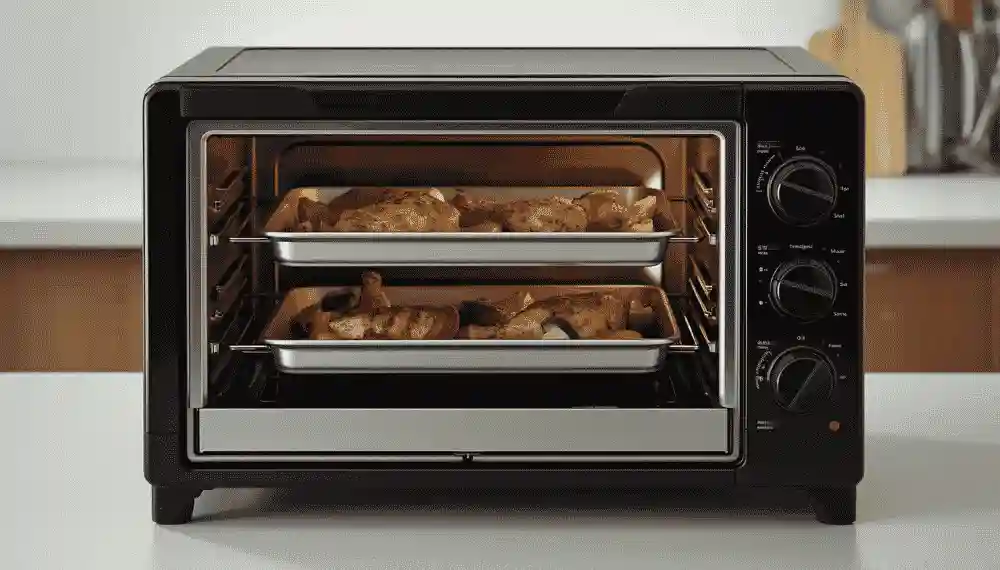
A toaster oven works through radiant and convective heat, the same basic principle as a full-size oven. Heat radiates from the exposed elements and warms the food's surface first, then works inward. This is slower, but it means moisture inside the food has time to evaporate off the surface rather than getting trapped underneath it. That's why a toaster oven can re-crisp a crust that a microwave will only soften: the surface dries out and browns slightly while the inside catches up to temperature.
Neither mechanism is "better" in the abstract. They're suited to different jobs, and the rest of this guide breaks down exactly which job belongs to which appliance.
Which Is Better for Reheating Pizza?
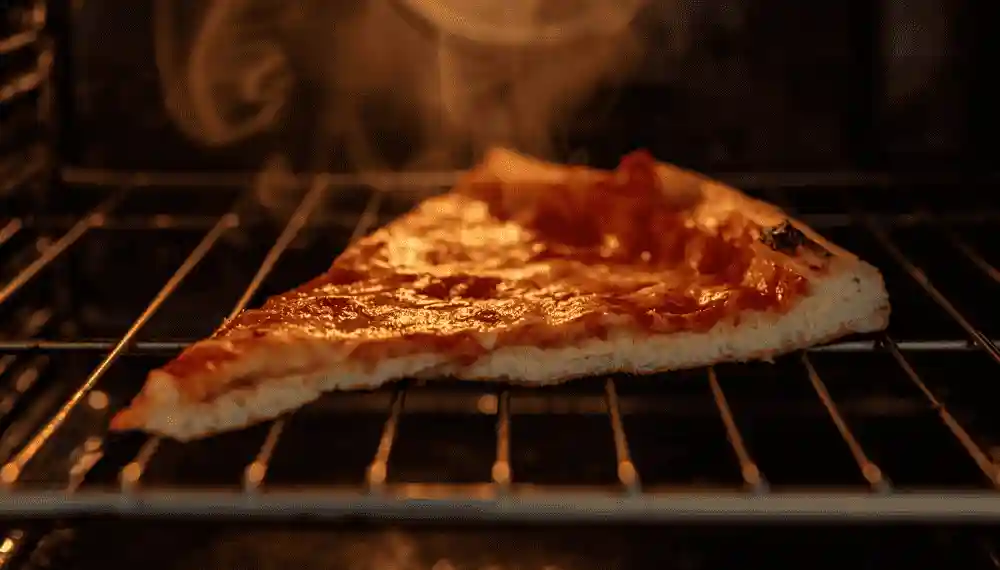
Short answer: the toaster oven, by a wide margin, for anyone who cares about crust texture.
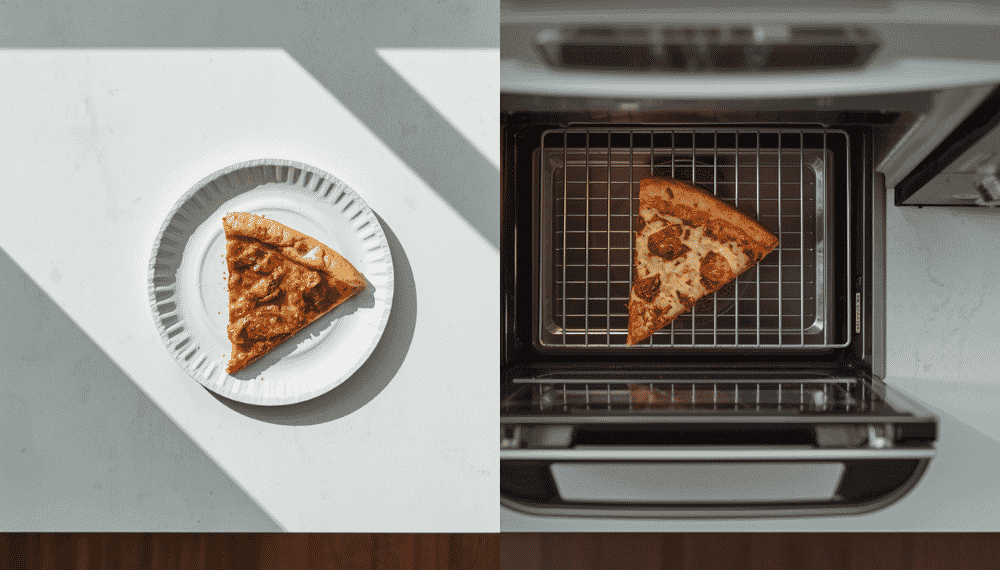
This is the single most lopsided result in this entire comparison. A microwaved slice of pizza heats through in 60 to 90 seconds, but the crust goes soft, sometimes nearly damp, because the steam from the melting cheese and sauce has no escape route except straight through the bread. You end up with hot pizza that bends rather than holds its shape.
A toaster oven set to 375°F takes 5 to 7 minutes, but the result is dramatically different: the crust re-crisps because it's drying out and lightly toasting at the same time the cheese remelts. Placing the slice directly on the wire rack, rather than on a tray, makes the difference even more noticeable, since air can circulate underneath the crust as well as above it.
The only scenario where the microwave wins on pizza: you genuinely don't care about crust and just want it hot in under a minute, or you're reheating a deep-dish or stuffed-crust style where the crust-to-topping ratio matters less.
Which Is Better for Reheating Fried Food?
Short answer: the toaster oven, almost without exception, because a microwave cannot restore crispness once it's gone — it can only make it worse.
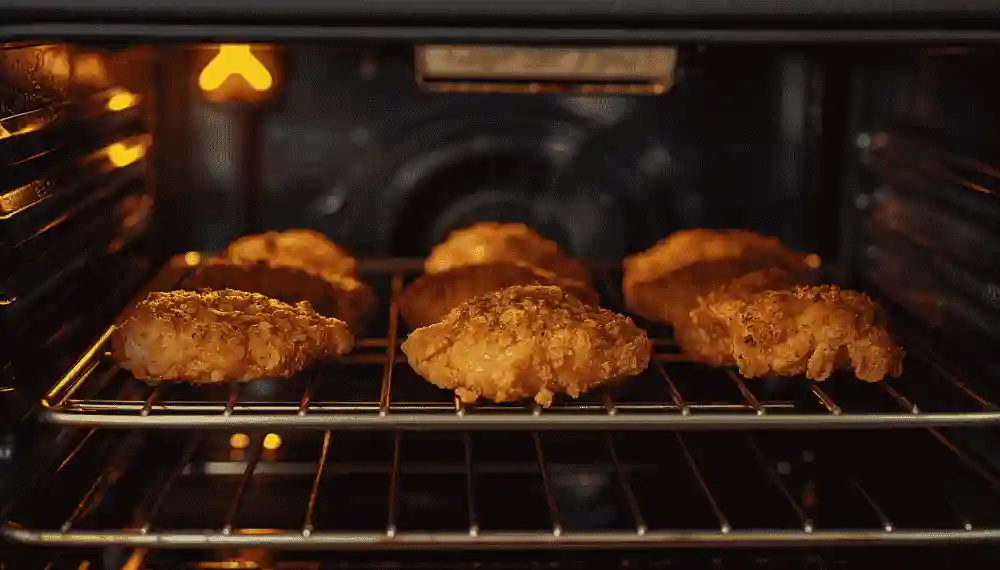
Fried chicken, fries, egg rolls, mozzarella sticks — anything that depended on a crisp exterior when it was first cooked loses that exterior entirely in a microwave. The dielectric heating method has no way to dry out a surface; if anything, it traps steam against breading and batter, turning crispy coating into a soft, occasionally gummy layer.
A toaster oven, especially one with a convection setting, can genuinely restore a meaningful amount of crispness. Set to 375–400°F for 8 to 12 minutes depending on thickness, with the food elevated on a rack rather than sitting flat on a tray, the surface moisture evaporates and the coating crisps back up, sometimes close to its original texture.
If you only have a microwave available and fried food is what you're reheating, a small trick helps marginally: leaving the food uncovered, rather than sealing it under a lid or paper towel, at least reduces some of the steam-trapping effect. It won't match a toaster oven, but it's better than nothing.
Which Is Better for Reheating Rice?
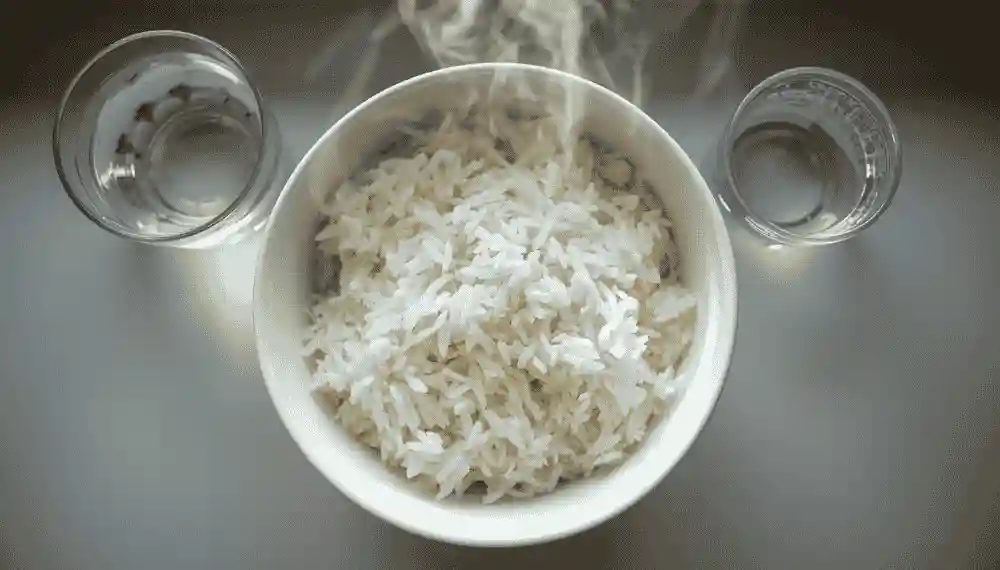
Short answer: the microwave, clearly, because rice's biggest reheating problem is moisture loss, and the microwave is the one appliance built to add moisture back rather than dry it out further.
Rice that's been refrigerated loses moisture and firms up. A toaster oven, which heats by drying the surface, makes this worse — reheated rice in a toaster oven tends to come out drier and slightly tougher unless you add extra moisture yourself before cooking.
A microwave handles this well specifically because you can add a splash of water to the rice, cover the container loosely, and let the steam generated by the microwave's heating process redistribute moisture back into the grains. One to two minutes on high, stirring once halfway through, typically restores rice close to its original texture.
A quick and important food-safety note here: cooked rice should always be reheated to a safe internal temperature, generally to steaming hot throughout (165°F), and shouldn't sit at room temperature for more than two hours before refrigeration in the first place, since rice carries a higher risk of bacterial spore survival than most other reheated foods.
Which Is Better for Reheating Soup or Other Liquids?
Short answer: the microwave, decisively, because a toaster oven has no practical way to heat a liquid evenly or quickly, and most toaster ovens aren't designed to safely hold an open container of liquid at all.
This is the cleanest, least debatable result in this comparison. Soups, stews, gravies, and sauces rely on convection currents within the liquid itself to distribute heat evenly, which a microwave does reasonably well, especially with an occasional stir. A toaster oven, by contrast, would heat a bowl of soup unevenly from the outside in, taking far longer and risking a scorched film forming at the surface or edges long before the center is hot.
There's also a practical safety dimension: most toaster oven manuals don't recommend placing uncovered liquids directly inside, since spills onto the heating element are a real risk. For soups, broths, gravies, and anything liquid, the microwave isn't just faster — it's the genuinely correct tool.
Which Is Better for Reheating Baked Goods?
Short answer: the toaster oven, because baked goods rely on a dry, slightly crisp or tender exterior that a microwave cannot replicate and will usually actively ruin.
Reheating a croissant, a slice of banana bread, a dinner roll, or a pastry in the microwave produces a specific, often-complained-about result: the inside turns gummy or rubbery within seconds of cooling back down, because the trapped steam re-hydrates the crumb structure unevenly. Thirty seconds too long and the texture is unsalvageable.
A toaster oven at 300–325°F for 5 to 8 minutes warms baked goods gently while letting any released moisture escape, which is exactly why baked goods reheated this way taste close to fresh rather than reheated. This is the same lower-and-slower temperature range we recommend across the board for baking in a toaster oven, and it applies just as well to reheating.
Should You Cover Food When Reheating, and Does It Matter Which Appliance You're Using?
Short answer: covering matters for both appliances, but for opposite reasons — in a microwave it traps helpful moisture, while in a toaster oven it usually works against the texture you're trying to achieve.
In a microwave, covering food loosely with a microwave-safe lid, a damp paper towel, or a vented cover traps steam around the food, which helps prevent drying out, especially for foods like rice, vegetables, or sliced meat that benefit from extra moisture. The trade-off is that anything you wanted to stay crisp will lose that crispness faster under a cover, since the trapped steam has nowhere else to go.
In a toaster oven, covering food with foil generally works against the appliance's core advantage. The entire reason a toaster oven re-crisps pizza crust or restores some crunch to fried food is that moisture is allowed to escape as hot air circulates around the food. Tenting foil over the top traps that same steam against the food's surface, undoing much of the benefit. The one exception is reheating something that's prone to drying out too fast on top before the inside catches up — a thick portion of meat, for example — where a loose foil tent for the first half of reheating, removed for the final few minutes, balances moisture retention against surface browning.
The practical rule: if you want crispness, leave it uncovered in the toaster oven. If you want moisture retention and you're using a microwave, cover it loosely. Mixing the two approaches — covering food in the toaster oven, or leaving moisture-sensitive food uncovered in the microwave — tends to produce the worst version of both appliances' results rather than the best.
Which Is Better for Reheating Coffee or Other Hot Beverages?
Short answer: the microwave, without much competition, since a toaster oven has no practical way to safely or evenly reheat a liquid in an open container.
This one rarely makes it into reheating comparisons, but it's a genuinely common everyday question. Reheating coffee, tea, or any hot beverage in a toaster oven isn't just impractical, it's not something any manufacturer recommends, since open liquid containers near a heating element carry a real risk of spills and steam buildup inside a small cavity.
A microwave handles this in 30 to 60 seconds for a standard mug, and stirring the beverage once partway through helps distribute heat more evenly, since microwaves can create slightly uneven hot spots in a tall, narrow container like a mug. For coffee specifically, reheating more than once tends to degrade the flavor noticeably, developing a slightly bitter, flat taste — this is true regardless of which appliance you'd theoretically use, and it's a flavor-chemistry issue rather than an appliance limitation.
Short answer: it depends on the cut and whether you're prioritizing speed or texture, but the toaster oven generally wins for anything where the original texture mattered.
Reheating a steak, roasted chicken, or pork chop in a microwave is fast but punishing on texture — meat proteins continue to tighten and expel moisture under microwave heating, which is why microwaved meat so often comes out tougher and drier than it started, even when it's only reheated for a minute or two.
A toaster oven set to a moderate 300°F, ideally with the meat loosely tented in foil for the first portion of reheating to trap some moisture before removing the foil for the last few minutes to avoid steaming it soft, reheats meat far more gently. It takes longer (10 to 20 minutes depending on the cut), but the texture loss is dramatically smaller.
The exception: thin-cut meats or anything already sauced and moisture-rich, like meatballs in sauce or sliced deli meat in gravy, where the microwave's speed advantage matters more than the modest texture cost, since the sauce is already doing the job of keeping things moist.
Is It Safe to Reheat Leftovers in a Toaster Oven Instead of a Microwave?
Short answer: yes, as long as the food reaches a safe internal temperature throughout, which a food thermometer confirms far more reliably than guessing by time alone.
Food safety doesn't depend on which appliance you use — it depends on reaching and holding a safe internal temperature. The general benchmark for most reheated leftovers is 165°F throughout, the same standard used for cooking poultry from raw. A toaster oven can absolutely reach and hold this temperature; it just takes longer than a microwave to get there, especially for denser or larger portions.
The one place toaster ovens require more attention than microwaves: uneven heating at the edges versus the center of a larger dish. A microwave's rotating turntable helps distribute heat reasonably evenly through a liquid or semi-liquid dish; a toaster oven reheating a large casserole can leave the center cooler than the edges if the dish isn't stirred or rotated partway through. For anything thick or dense, checking the center with a thermometer is worth the extra ten seconds it takes.
There's also a "reheating more than once" consideration that applies regardless of appliance. Food safety guidance generally recommends only reheating a given portion of leftovers one time — repeatedly cooling and reheating the same container increases the window of time food spends in the temperature range where bacteria multiply most readily, generally between 40°F and 140°F. If you're not going to finish a full container in one reheating, it's safer to portion out only what you'll eat and leave the rest refrigerated rather than reheating the whole thing and cooling it again.
One more practical distinction worth knowing: a microwave heats unevenly enough, particularly in the center of dense foods, that the USDA specifically recommends stirring and checking multiple spots with a thermometer rather than trusting a single reading. A toaster oven's heat is more uniform front-to-back and top-to-bottom by comparison, but it's still worth checking the thickest part of whatever you're reheating, especially meat or anything that started the day fully raw and was only partially cooked before refrigeration (which shouldn't happen, but does, and is worth flagging — never finish cooking raw or undercooked food via reheating; it needs to reach a safe temperature the first time it's cooked, not the second).
Which Is Better for Reheating Roasted or Cooked Vegetables?
Short answer: the toaster oven, for most vegetables that were originally roasted or had any crispy edge, because the microwave tends to make vegetables go limp and watery.
Roasted vegetables — broccoli, Brussels sprouts, potatoes, peppers — lose the caramelized, slightly crisp edges that made them appealing in the first place almost immediately in a microwave. The dielectric heating process draws out residual moisture from inside the vegetable, and since there's no way for that moisture to evaporate inside a sealed microwave-safe container, it just pools around the vegetable, leaving it soft and slightly soggy rather than reheated.
A toaster oven at 400°F for 8 to 10 minutes, with vegetables spread in a single layer on a tray or rack rather than piled together, restores a real amount of the original texture. The dry, circulating heat re-evaporates surface moisture and can even re-crisp edges that had gone slightly soft in the refrigerator.
The exception is vegetables that were never meant to be crispy in the first place — steamed green beans, mashed sweet potatoes, or anything saucy like creamed spinach. For these, the microwave's speed advantage matters more than texture preservation, since there was no crispness to lose to begin with. Stir partway through if reheating a larger portion, since microwaves can leave cooler pockets in a dense pile of vegetables that a single stir usually evens out.
Which Appliance Should You Default To If You Can Only Use One?
Short answer: if you had to pick only one appliance for reheating and nothing else, the toaster oven covers more ground, but you'd lose real convenience on liquids, rice, and anything you want reheated in under two minutes.
This is worth answering directly, because plenty of smaller kitchens or shared living situations genuinely only have room or budget for one. A toaster oven handles pizza, fried food, baked goods, roasted vegetables, and most meats better than a microwave does — that's five of the eight categories covered in this guide. It loses clearly only on rice, soups and liquids, and beverages, plus it loses on raw speed across the board.
A microwave, run the other direction, wins on rice, liquids, and speed, but actively makes pizza, fried food, baked goods, and roasted vegetables worse rather than just slower.
If counter space or budget forces a single choice and your diet leans toward more solid, texture-dependent foods — pizza nights, fried leftovers, roasted dinners — the toaster oven is the better single appliance, with the acknowledgment that you'll need to adapt how you reheat rice (more added water, more patience) and you'll want a separate small pot on the stove for soups and liquids rather than relying on the toaster oven for them at all.
If you only remember one section from this guide, remember this table.
| Food | Better Choice | Why |
|---|---|---|
| Pizza | Toaster oven | Re-crisps the crust instead of softening it |
| Fried food (chicken, fries, egg rolls) | Toaster oven | Only appliance that can restore any crispness |
| Rice | Microwave | Adds moisture back rather than drying further |
| Soup, stews, gravies | Microwave | Faster, more even, and the safer appliance for liquids |
| Baked goods (pastries, bread, rolls) | Toaster oven | Avoids the gummy texture microwaves cause |
| Steak, roasted meat, pork chops | Toaster oven | Gentler heat preserves texture and moisture |
| Thin meats already in sauce | Microwave | Sauce already protects moisture; speed wins |
| Leftover casseroles, large dense dishes | Toaster oven (with a stir or rotation check) | More even result if you check the center |
Frequently Asked Questions
Why does microwaved pizza always get soggy? Microwaves heat food primarily by exciting water molecules, generating steam from the sauce and cheese with no way for it to escape except through the crust itself, which softens the bread from underneath. A toaster oven heats the surface first, allowing that same steam to escape upward and outward instead of saturating the crust.
Is it safe to reheat rice in a toaster oven? It's safe, but it's not the better choice — rice has already lost moisture in the refrigerator, and a toaster oven's drying heat tends to make it firmer or tougher rather than restoring its original texture. A microwave with a splash of added water handles rice more effectively for this specific reason.
How long does it take to reheat leftovers in a toaster oven versus a microwave? A microwave typically reheats a standard portion in 1 to 3 minutes. A toaster oven takes meaningfully longer, usually 8 to 15 minutes depending on the food and how thick or dense it is, because it relies on slower radiant heat rather than heating water molecules directly throughout the food.
Can you reheat fried food without a microwave and still get it crispy? Yes — a toaster oven, especially one with a convection setting, is the better option specifically because it can restore some crispness through dry, circulating heat. Elevating the food on a wire rack rather than letting it sit flat on a tray makes a meaningful difference in how much crispness comes back.
Does reheating in a toaster oven dry out food more than a microwave? It can, for foods that are already moisture-sensitive, like rice or thin slices of meat without sauce. For foods where dryness is actually desirable, like pizza crust, fried coatings, or baked goods, that same drying effect is exactly what produces a better result than a microwave.
What to Read Next
For the exact toaster oven temperatures and times to use for any food, not just leftovers, our Toaster Oven Temperature Guide has the exact reheating settings we recommend for leftovers, along with every other category of food. If reheated food keeps leaving grease behind on the interior, our toaster oven cleaning guide covers keeping grease from reheated food off the interior without damaging the coating.
For the bigger-picture question of which appliance to actually own, see the full toaster oven vs. microwave vs. air fryer breakdown in our toaster oven buying guide, which compares all three across more than just reheating.
Zahid Hussain is a kitchen appliance reviewer and home cook. He has tested more than 20 countertop appliances for ProvenPathly, with a focus on toaster ovens, air fryers, and countertop convection ovens. His testing methodology prioritizes real-world home cooking over lab conditions — every recommendation is made from a kitchen counter, not a spec sheet.