Tested across multiple toaster oven models in a real home kitchen | Last updated: June 2026 | Prices and product availability verified June 2026
By Zahid Hussain | Kitchen appliance reviewer & home cook
One of the most common frustrations I hear from readers — and ran into myself when I first started testing toaster ovens — isn't the appliance itself. It's the guesswork. You set a temperature, follow a recipe written for a full-size oven, and end up with chicken that's burnt on the outside and raw in the middle, or cookies that spread into a single flat disc. After testing more than a dozen toaster oven models and cooking hundreds of meals in them, I can tell you: the toaster oven is almost never the problem. The temperature setting almost always is. This guide fixes that.
Why Toaster Oven Temperatures Behave Differently
This is the part most temperature guides skip entirely, and it's the most useful thing to understand before you look at a single number.
A toaster oven works on the same principle as a full-size oven — radiant heat from electric elements above and below the food. The critical difference is the size of the cooking cavity. In a standard oven, your food sits 8 to 12 inches from the heating elements. In most toaster ovens, that distance is 3 to 5 inches. Sometimes less.
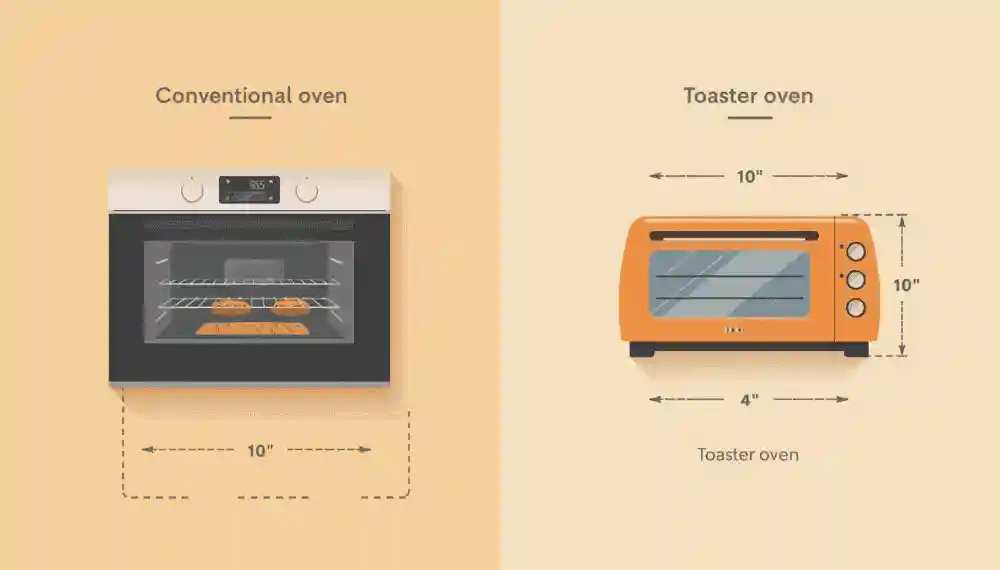
What this means in practice:
The heat is more direct and more intense. Even at the same thermostat setting, food in a toaster oven experiences more aggressive radiant heat than food in a conventional oven. The top of a dish browns faster. The edges of cookies can set before the centers do. Chicken skin can look done while the meat underneath is still underdone.
The cavity heats up and cools down faster. This is actually an advantage — toaster ovens don't need long preheat times — but it also means temperature swings between the heating element cycling on and off are more noticeable in a small space.
Hot spots exist. Almost every toaster oven has areas that run slightly hotter than others, usually toward the back and closer to the elements. Once you know where your oven's hot spots are, you can rotate food halfway through cooking and compensate accordingly.
Understanding these three dynamics is what separates consistently good results from constant frustration.
The Golden Rules Before You Look at Any Temperature
Rule 1: Subtract 25°F (15°C) from conventional oven recipes. This single adjustment accounts for the more intense radiant heat and closer proximity to the elements. If a recipe says 400°F, set your toaster oven to 375°F.
Rule 2: Start checking 5 minutes early. Even with the temperature adjustment, toaster ovens can outperform the expected time on some foods. Build the habit of checking earlier than the recipe suggests — especially the first time you make something.
Rule 3: Always preheat. It takes 5 minutes or less, and it matters more in a toaster oven than in a conventional oven because the smaller cavity means the initial temperature drop when you open the door is proportionally larger. A preheated toaster oven recovers faster and cooks more evenly.
Rule 4: Use a rack, not just a pan. When possible, elevate food on a wire rack set inside your pan. This allows air to circulate underneath, which promotes even cooking and prevents the bottom from sitting in its own moisture.
Understanding Your Settings: Bake, Broil, Convection, and Toast
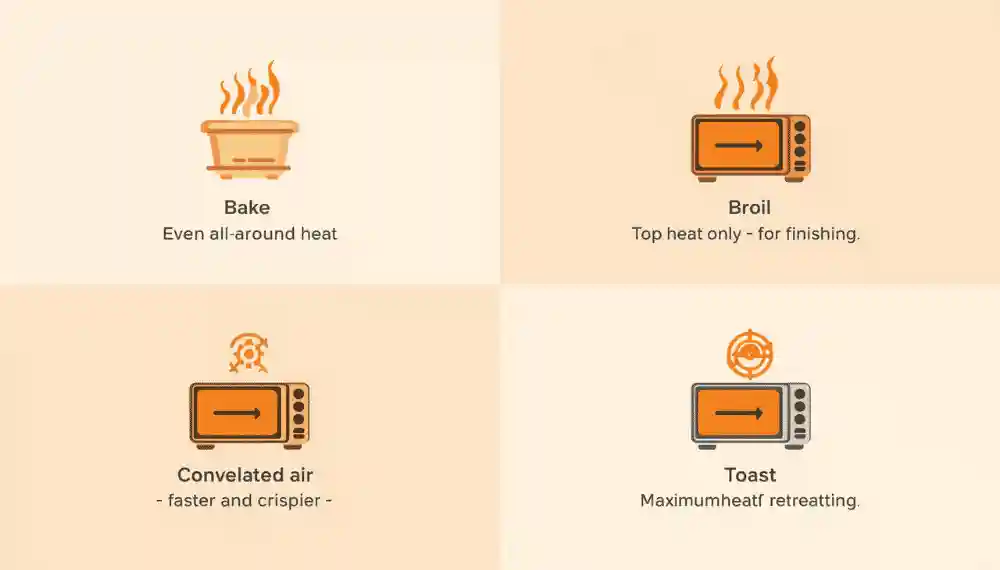
Most toaster ovens have between three and five settings. Here's what each one actually does and when to use it.
Bake
This is your default setting for almost everything. Both the top and bottom heating elements cycle on and off to maintain the set temperature. Use bake for chicken, fish, vegetables, casseroles, cookies, muffins, and any dish where you want even, all-around heat without aggressive browning.
Broil
Broil activates only the top heating element at maximum heat — typically 450 to 500°F (230 to 260°C) regardless of where your dial is set. It's for finishing, not cooking through. Use broil for the last 2 to 3 minutes of cooking to brown the top of a dish, melt cheese, or crisp the surface of something that's already cooked. Never use broil as a substitute for bake on raw food — the outside will burn before the inside is safe to eat.
Convection
If your toaster oven has a convection setting, it adds a fan that circulates the hot air throughout the cavity. This produces more even cooking, faster browning, and crispier results — especially for roasted vegetables, chicken skin, and anything breaded or battered. When using convection, reduce the temperature by an additional 25°F on top of the standard adjustment, or reduce the cook time by about 20%. You don't need to do both.
Toast
The toast setting typically runs both elements at full heat and is calibrated for bread thickness and shade preference. It's not suitable for cooking raw food, but it's excellent for finishing bread, reheating flatbreads, or crisping the top of an already-cooked dish quickly.
Complete Toaster Oven Temperature Guide by Food Category
Poultry
| Food | Temperature | Time | Internal Temp |
| Chicken thighs (bone-in) | 400°F / 200°C | 35–40 min | 165°F / 74°C |
| Chicken breast (boneless) | 375°F / 190°C | 22–28 min | 165°F / 74°C |
| Chicken drumsticks | 400°F / 200°C | 30–35 min | 165°F / 74°C |
| Chicken wings | 400°F / 200°C | 25–30 min | 165°F / 74°C |
| Ground turkey patties | 375°F / 190°C | 20–25 min | 165°F / 74°C |
| Duck breast | 375°F / 190°C | 20–25 min | 165°F / 74°C |
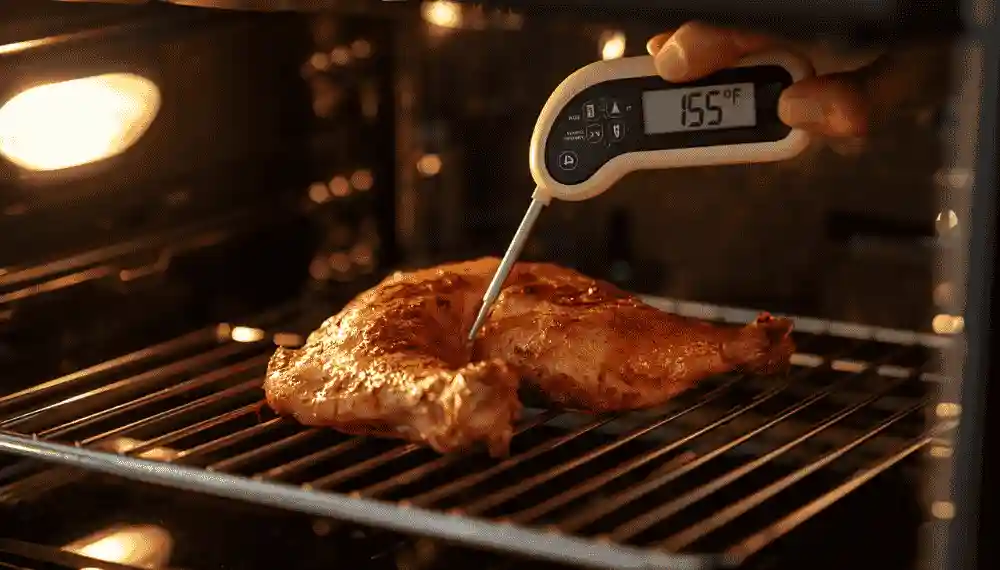
The most important thing about poultry: temperature is not optional. A meat thermometer inserted into the thickest part of the meat — not touching bone — is the only reliable way to confirm doneness. Color and juices are not trustworthy indicators.
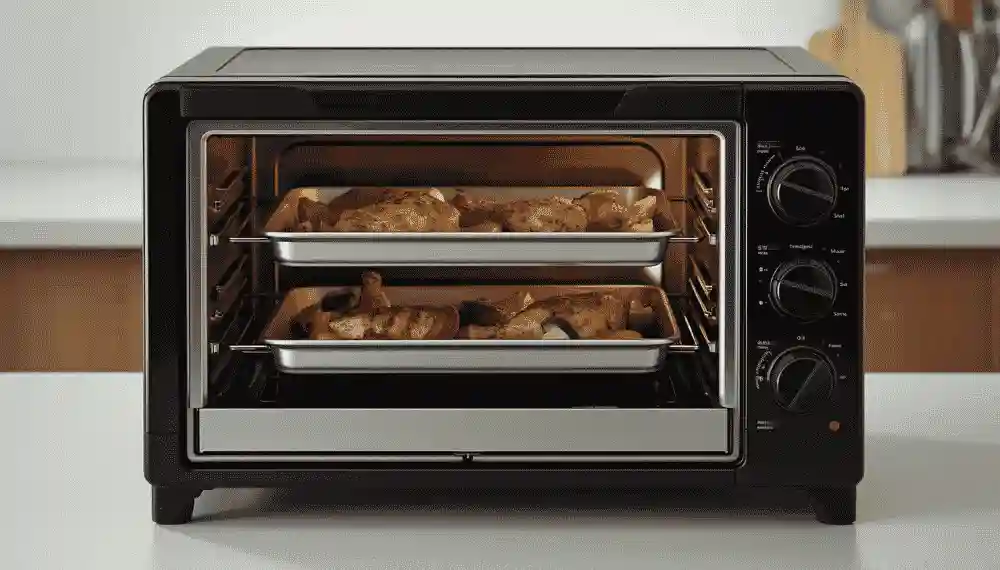
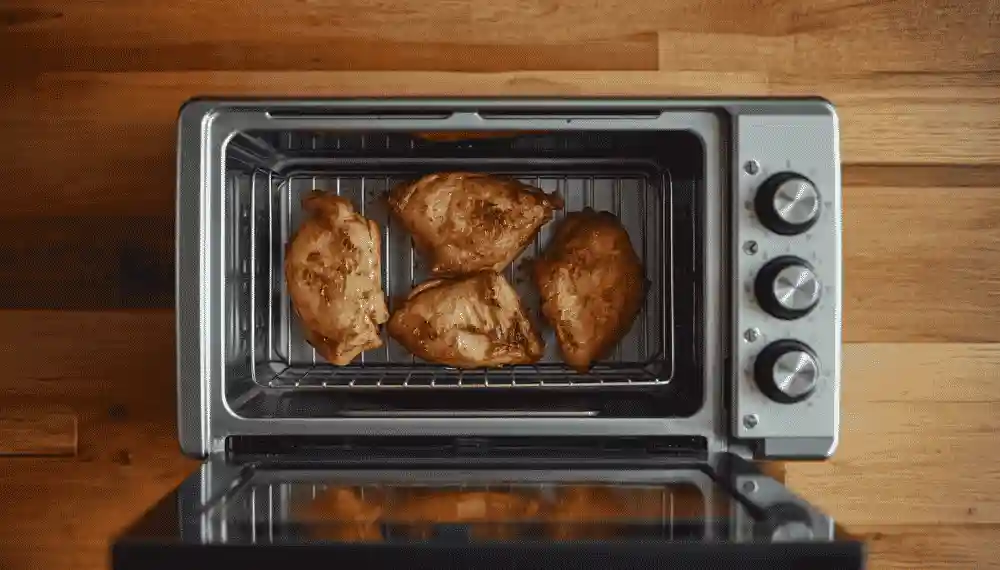
For crispy skin on chicken thighs or drumsticks, pat the skin completely dry before seasoning, and place the pieces skin-side up on a rack. If your toaster oven has a convection setting, use it for the last 10 minutes.
Meat and Seafood
| Food | Temperature | Time | Internal Temp |
| Salmon fillet (1 inch thick) | 400°F / 200°C | 10–14 min | 145°F / 63°C |
| Shrimp (peeled) | 400°F / 200°C | 6–8 min | Pink and opaque |
| Tilapia / white fish fillet | 400°F / 200°C | 12–15 min | 145°F / 63°C |
| Pork chops (boneless, 1 inch) | 400°F / 200°C | 20–25 min | 145°F / 63°C |
| Pork tenderloin (small) | 375°F / 190°C | 25–30 min | 145°F / 63°C |
| Beef steak (1 inch, medium) | 425°F / 220°C | 12–16 min | 145°F / 63°C |
| Ground beef patties | 375°F / 190°C | 18–22 min | 160°F / 71°C |
| Meatballs | 400°F / 200°C | 18–22 min | 160°F / 71°C |
| Bacon strips | 400°F / 200°C | 12–18 min | Crisp to preference |
A note on steak: A toaster oven produces a respectable steak when you use high heat and don't crowd the pan. For the best result, sear the steak in a cast iron skillet on the stovetop first (2 minutes per side), then transfer the entire pan to the toaster oven to finish at 425°F. This mimics the steakhouse method and gives you a proper crust with a controlled interior.
Seafood cooks fast. Shrimp can go from perfectly cooked to rubbery in 2 minutes. Set a timer and check early. Salmon is done when it flakes easily with a fork and the interior has turned from translucent to opaque
Vegetables
| Food | Temperature | Time | Notes |
| Broccoli florets | 425°F / 220°C | 15–18 min | Toss in oil, shake halfway |
| Brussels sprouts (halved) | 425°F / 220°C | 20–25 min | Cut-side down for char |
| Asparagus | 400°F / 200°C | 10–14 min | Thin spears cook faster |
| Cherry tomatoes | 400°F / 200°C | 15–20 min | Will blister and burst |
| Zucchini / squash (sliced) | 400°F / 200°C | 15–20 min | Single layer only |
| Bell peppers (strips) | 400°F / 200°C | 18–22 min | Flip halfway |
| Carrots (sliced) | 400°F / 200°C | 20–25 min | Cut thin for even cooking |
| Potatoes (cubed, 1 inch) | 425°F / 220°C | 25–30 min | Parboil first for crispier result |
| Sweet potatoes (cubed) | 400°F / 200°C | 25–30 min | Toss in oil and cinnamon |
| Cauliflower florets | 425°F / 220°C | 20–25 min | High heat = better caramelization |
| Corn on the cob | 400°F / 200°C | 20–25 min | Rotate every 8 minutes |
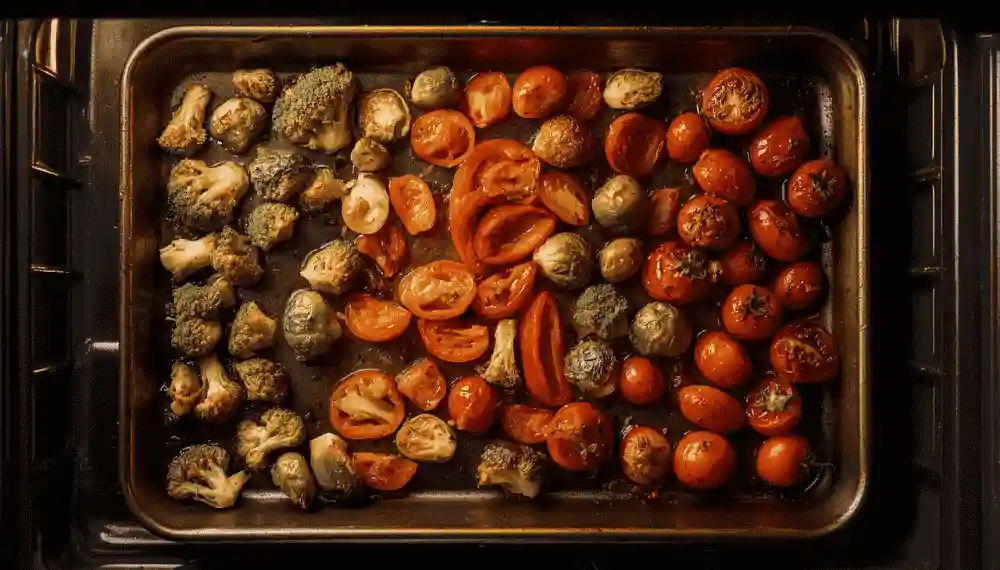
The single most common vegetable mistake: overcrowding the pan. When vegetables are piled on top of each other, they release steam that has nowhere to go. Instead of roasting, they soften without browning and end up waterlogged. Use a single layer with visible space between pieces, and use the highest temperature that won't burn the edges — usually 400 to 425°F. That's where caramelization happens.
Frozen Foods
| Food | Temperature | Time | Notes |
| Frozen pizza (personal size) | 400°F / 200°C | 10–14 min | Rack directly, no pan |
| Frozen French Fries | 400°F / 200°C | 18–22 min | Single layer, shake halfway |
| Frozen chicken nuggets | 400°F / 200°C | 12–16 min | Flip halfway through |
| Frozen fish sticks | 400°F / 200°C | 14–16 min | Rack for better crispiness |
| Frozen burritos | 375°F / 190°C | 18–22 min | Wrap in foil first |
| Frozen vegetables | 400°F / 200°C | 15–20 min | No need to thaw |
| Frozen waffles / pancakes | 375°F / 190°C | 6–8 min | Better than microwave |
| Frozen pot pie | 375°F / 190°C | 35–45 min | Cover edges with foil if browning too fast |
Important for frozen foods: don't reduce the temperature the way you would for fresh food. Frozen items need the full heat to drive out moisture and achieve proper texture. The exception is dishes with a pastry component (like pot pie) — the crust can over-brown before the interior heats through, so a foil tent over the edges helps.
For crispier frozen fries and nuggets, use the convection setting if your toaster oven has one. It dramatically improves the texture by pulling surface moisture away more aggressively.
Baked Goods
| Food | Temperature | Time | Notes |
| Cookies (drop style) | 325–350°F / 165–175°C | 10–14 min | Light pan, rotate halfway |
| Brownies (8x8 pan) | 325°F / 165°C | 22–28 min | Check at 20 minutes |
| Muffins (standard size) | 350°F / 175°C | 18–22 min | Tent with foil if tops brown early |
| Banana bread (small loaf) | 325°F / 165°C | 45–55 min | Toothpick test to confirm |
| Dinner rolls | 350°F / 175°C | 15–18 min | Brush with butter after |
| Focaccia (thin) | 375°F / 190°C | 18–22 min | Use a well-oiled pan |
| Small cake (6-inch round) | 325°F / 165°C | 28–35 min | Test at 25 minutes |
| Scones | 375°F / 190°C | 14–18 min | Use parchment-lined pan |
Baking in a toaster oven requires more patience with temperature. Go lower and slower than you think — 325°F is the sweet spot for most baked goods because it lets the interior cook through before the outside sets. Dark pans absorb more heat and will over-brown bottoms; light-colored metal pans give you more control.
For cookies specifically, rotate the pan at the halfway mark because toaster ovens almost always have a hot spot at the back. The front cookies will be slightly paler than the back ones if you don't rotate.
Snacks and Quick Bites
| Food | Temperature | Time | Notes |
| Garlic bread | 375°F / 190°C | 8–10 min | Broil 2 min at end |
| Quesadilla | 400°F / 200°C | 5–7 min | Flip halfway, rack for crispiness |
| Nachos | 375°F / 190°C | 7–10 min | Add cold toppings after |
| Roasted chickpeas | 400°F / 200°C | 25–30 min | Dry thoroughly before roasting |
| Flatbread / naan pizza | 400°F / 200°C | 8–10 min | Directly on rack |
| Toast (thick bread) | Toast setting or 375°F | 4–6 min | Watch closely |
| Reheated pizza | 375°F / 190°C | 5–7 min | No cover, directly on rack |
| Stuffed mushrooms | 375°F / 190°C | 18–22 min | Foil-lined pan |
Rack Position: The Setting Nobody Talks About
Temperature gets all the attention, but rack position is equally important and almost never discussed in basic guides.
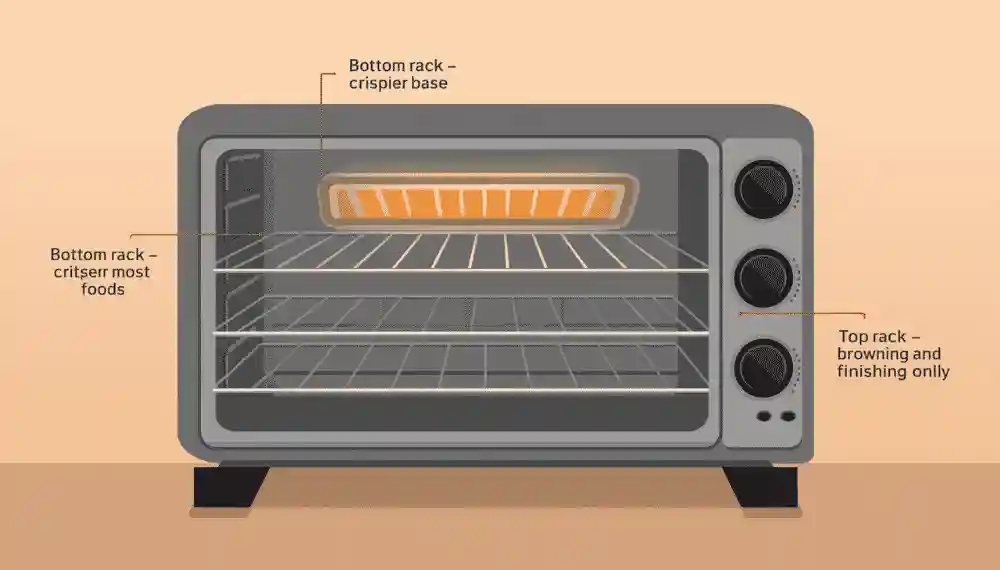
Most toaster ovens have two or three rack positions. Here's how to use them:
Middle rack is your default. It provides the most balanced heat from both the top and bottom elements. Use it for baking, roasting, and most general cooking. When in doubt, middle rack.
Bottom rack moves food closer to the lower heating element. Use this when you want a crispier bottom — pizza, cookies, roasted potatoes, or anything where the base needs more direct heat. The trade-off is that the top may brown more slowly.
Top rack moves food closer to the upper heating element. Use it only when you want to brown the top of something quickly — finishing a casserole, melting cheese, or getting color on the top of a muffin. Be careful: on the top rack, food burns fast. It's not a cooking position, it's a finishing position.
A practical two-phase method: Cook most dishes on the middle rack at your standard temperature. For the last 3 to 5 minutes, move to the top rack (or switch to broil) to brown and finish the surface. This two-phase approach gives you control over the interior cook and the exterior appearance independently.
How to Know If Your Toaster Oven Runs Hot or Cold
In my testing, I found temperature variances ranging from 18°F to 52°F across popular models — the Hamilton Beach and Breville both ran within 10°F of their dial readings, while a budget model I tested ran consistently 40°F hot.
This matters more than most people realize. Toaster oven thermostats are notoriously inaccurate — tests across popular models consistently show temperature variances of 25 to 50°F from the dial reading. Some run hot, some run cool, and a few run accurately.
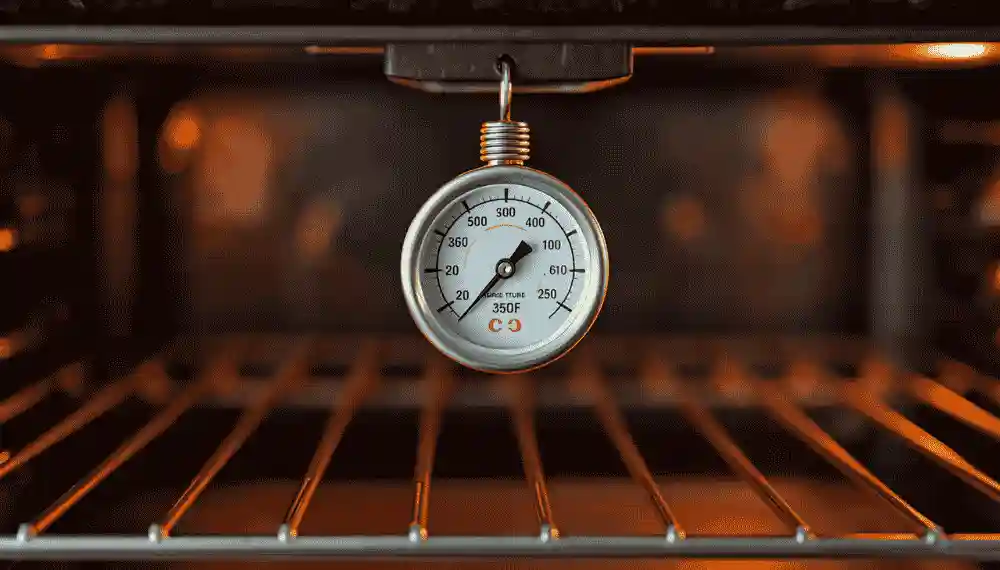
The fix is a small, inexpensive oven thermometer — the kind that hangs from a rack or stands on the floor of the oven. Put it inside, set your toaster oven to 350°F, let it preheat for 5 minutes, then read the thermometer.
- If the thermometer reads 375°F or higher: your oven runs hot. Subtract an additional 25°F from recipes and check food earlier than suggested.
- If the thermometer reads 325°F or lower: your oven runs cool. Add 15 to 25°F to recipes and allow extra time.
- If it reads close to 350°F: lucky you — your oven is accurate. The standard adjustments in this guide will work reliably.
Do this calibration once, note the variance, and apply it to every recipe going forward. It takes 10 minutes and removes the single biggest variable in toaster oven cooking.
Frequently Asked Questions
What temperature is equivalent to "medium" heat in a toaster oven? Medium heat in a conventional oven is typically 325 to 375°F. In a toaster oven, set to 300 to 350°F to account for the more intense radiant heat. Use 325°F as your go-to medium setting for baked goods and delicate proteins.
Should I always reduce the temperature for toaster oven recipes? Yes, as a general rule — reduce by 25°F from what a conventional oven recipe calls for. The exception is frozen foods, which benefit from the full heat to drive out moisture. And if your toaster oven runs cool (confirmed by a thermometer), you may not need to reduce at all.
What temperature do I use for reheating food in a toaster oven? 375°F is the ideal reheating temperature for most leftovers. It's hot enough to heat food through without drying it out. Pizza reheats especially well at this temperature — 5 to 7 minutes directly on the rack gives you a crispy bottom and melted top that a microwave can't match.
Can I use the same temperature for convection as for regular bake? No. Convection circulates hot air more aggressively, so it effectively cooks food faster and at a higher surface temperature. When switching from bake to convection, reduce the temperature by 25°F, reduce the cook time by about 20%, or do a combination of both — slightly lower temp and slightly shorter time. Watch the food the first time to calibrate for your specific model.
What's the maximum temperature most toaster ovens reach? Most consumer toaster ovens max out at 450 to 500°F (230 to 260°C). The broil setting typically runs at or near this maximum regardless of the temperature dial. Some higher-end models reach 500°F on the bake setting, which makes them capable of producing pizza with a properly blistered crust.
Why does my toaster oven burn the top of food before the inside is cooked? Two likely causes: the temperature is too high, or the food is too close to the upper heating element. Try lowering the temperature by 25°F and moving the rack down one position. Tenting the food loosely with aluminum foil for the first half of the cook time also prevents the top from setting too early — remove the foil in the last 10 minutes to allow browning.
Does toaster oven cooking time change at high altitude? Yes, in the same way conventional oven cooking is affected. At high altitude (above 3,500 feet), lower air pressure causes moisture to evaporate faster and leavening gases to expand more quickly. Baked goods tend to rise too fast and then fall. Increase oven temperature by 15 to 25°F and slightly reduce leavening agents in recipes. Proteins and vegetables are less affected.
A Quick Reference Summary
If you take nothing else from this guide, take these five principles:
1. Reduce temperature by 25°F from conventional oven recipes. This accounts for the more intense radiant heat from nearby elements.
2. Use the middle rack as your default. Switch to bottom rack for crispier bases, top rack only for finishing and browning.
3. Preheat every time. 5 minutes is all it takes, and it makes a real difference in cook time accuracy.
4. Check food 5 minutes before the estimated time. Toaster ovens are faster than expected, especially the first time you cook something new.
5. Calibrate with an oven thermometer. It costs very little and removes the most common source of inconsistent results. Know your oven's true temperature, and everything else gets easier.
What to Read Next
Once you know the right temperatures, the next question is what to actually cook. Our guide to 25 meals that work in a toaster oven covers everything from chicken thighs to brownies with the same level of practical detail — if this temperature guide is the reference, that article is the inspiration.
If you're still deciding which toaster oven to buy, or thinking about upgrading to a model with a reliable convection setting, the best toaster ovens guide covers the models that actually deliver consistent temperatures and even heat — which, after reading this guide, you now know matters more than almost any other feature.
Zahid Hussain is a kitchen appliance reviewer and home cook based in Austin, Texas. He has tested more than 20 countertop appliances for ProvenPathly, with a focus on toaster ovens, air fryers, and countertop convection ovens. His testing methodology prioritizes real-world home cooking over lab conditions — every recommendation is made from a kitchen counter, not a spec sheet.
Related reading: What Can You Cook in a Toaster Oven? (25 Meals That Actually Work) | How to Use a Toaster Oven for the First Time | Toaster Oven vs Air Fryer: Which One Do You Actually Need?